
By Marianna Richardson
– – –
On Monday, February 2nd, the International Religious Freedom (IRF) Summit kicked off in Washington, D.C., bringing together many of the world’s foremost religious freedom experts and advocates. The G20 Interfaith Forum attended the summit, sponsoring a booth and a side session on G20 priorities. This blog is Part 3 of a three-part summary covering the first day of the conference.
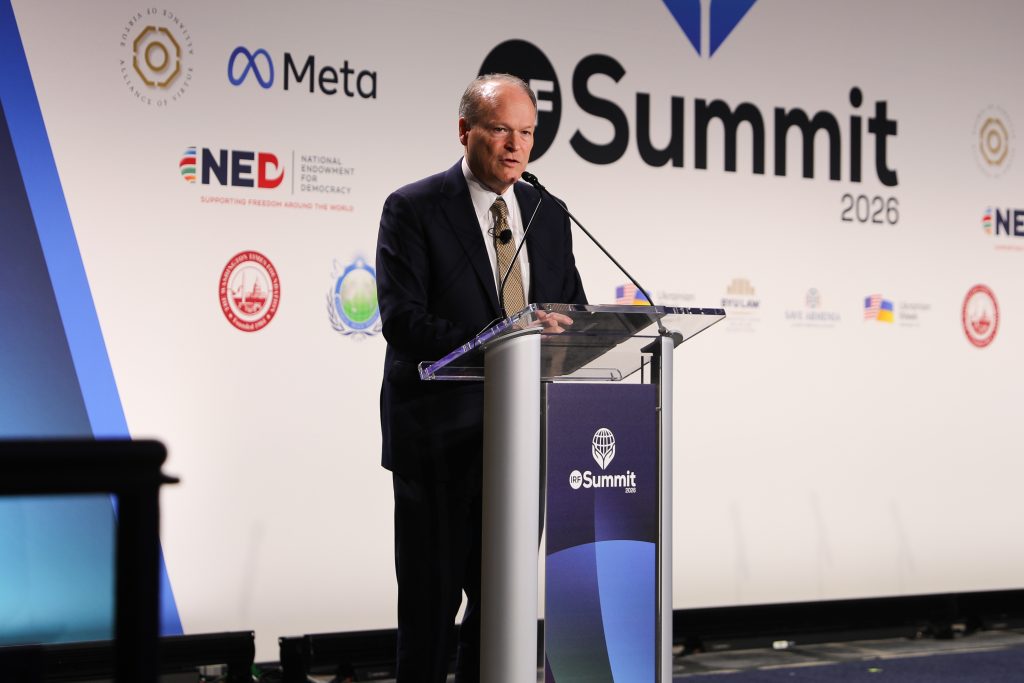
Elder Eric Baxter’s Remarks: The Church of Jesus Christ of Latter-day Saints
A Personal Encounter With Suffering
Elder Eric Baxter opened with heartfelt gratitude for those defending religious freedom, especially for the oppressed and imprisoned. He recalled an experience as a young missionary in Saint Petersburg, Russia, when a war‑weary man confronted him with the anguished question:
“Where is God when children are torn apart by bombs, women raped, or men maimed?”
Baxter admitted that his youthful faith was untested, and the man’s raw honesty pierced him deeply. He explained that he could never condemn someone who looks at the world’s suffering and despairs of God. Yet he expressed profound gratitude for people who face injustice directly and still perceive God’s presence amid suffering.
Lesson One: Faith Must Come First
Baxter shared that his own faith endured because he had learned from courageous believers who found meaning in suffering and hope in darkness. He argued that for religious freedom to flourish, vibrant personal faith must come first. Legal protections, historical arguments, and government support are important, but they cannot replace the sustaining power of genuine belief. He urged religious communities not to neglect foundational spiritual practices—studying scripture, praying, meditating, and worshiping together—because these cultivate humility, love, service, and the conviction that all people are children of God deserving dignity and respect. If religion becomes merely political, he warned, there is nothing distinctive left to defend.
Lesson Two: We Need Each Other’s Light
Baxter emphasized that religious freedom is strengthened when believers of different traditions stand together. As a religious‑liberty lawyer, he said his own faith has been deepened by the devotion of Sikhs, Jews, Muslims, Christians, Hindus, and Zoroastrians. He noted that protecting the rights of one group protects the rights of all.
A Shared Calling to Relieve Suffering
Baxter concluded by invoking a teaching from the Christian New Testament: pure religion is to care for the vulnerable. He argued that only a faith rooted in compassion and service can ultimately confront the reality of suffering. He urged the audience to strengthen their own faith and to stand side by side in defending every person’s right to pursue their beliefs according to conscience. He closed with a blessing of gratitude for all who lead this work.
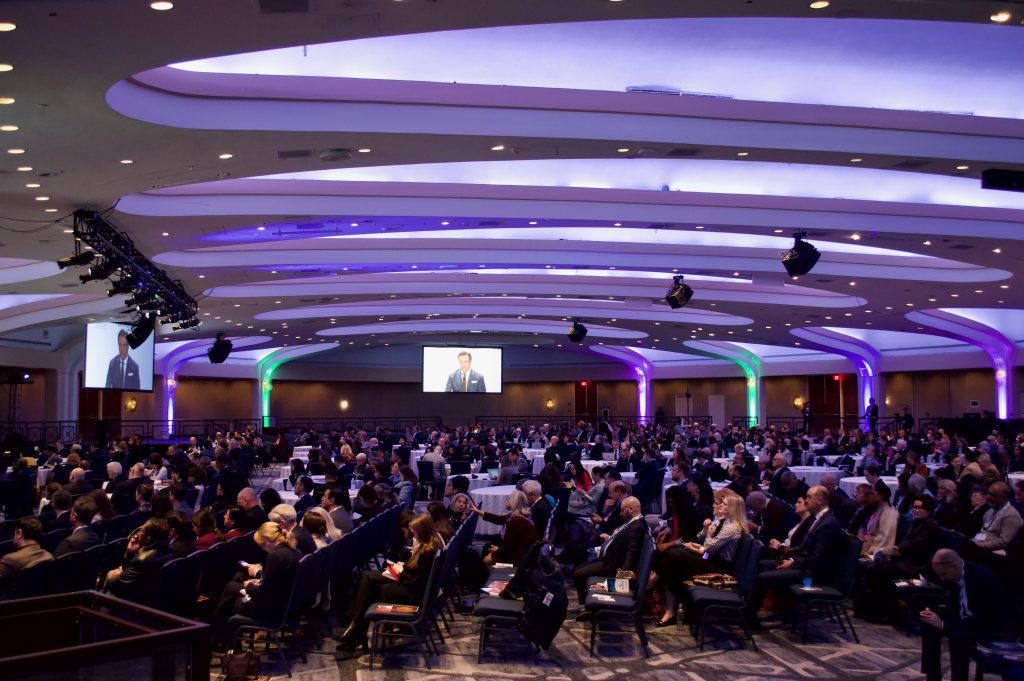
Beyond the List – Sanctions, Strategy, and Solutions: Strengthening the Global Accountability Toolkit for Religious Freedom
The session opened with a challenge to view the discussions not merely as information but as a practical toolkit for shaping a new world—one where victims of religious persecution are restored and accountability deters future abuses. Because of the sensitive nature of the panelists’ work, some portions of the session were held off the record to ensure privacy and safety.
Moderator Cole Durham: Purpose and Focus
Moderator Cole Durham explained that the panel aimed to explore the practical use of global religious‑freedom toolkits. Some panelists would describe how they have applied these tools in real‑world situations, while others would explain the tools themselves. Due to limited time, formal introductions were skipped so the panel could move directly into substantive presentations.
Kirsten Lavery (USCIRF): Strengths and Gaps in the CPC System
Kirsten Lavery outlined the role of the U.S. Commission on International Religious Freedom (USCIRF), created by the 1998 International Religious Freedom Act. USCIRF monitors global religious‑freedom conditions and provides policy recommendations to the U.S. government.
She explained the system of Countries of Particular Concern (CPCs)—the world’s worst violators of religious freedom. While CPC designations effectively spotlight abuses, they often fail to produce meaningful consequences. Since 1998, there have been 165 CPC designations across 17 countries, yet most administrations rely on “double‑hatted sanctions,” meaning they claim existing sanctions already fulfill the law’s requirements. About one‑quarter of cases involve waivers, usually for national‑security reasons.
Lavery noted that unique, direct consequences have occurred in fewer than 4% of cases. Only six times have CPC designations resulted in new sanctions or binding agreements. She argued that this weakens the system’s effectiveness and called for reforms, including binding agreements with clear benchmarks and targeted sanctions against specific officials responsible for violations.
She concluded that visibility alone is not enough. Naming violators must be paired with persistent messaging and real consequences—whether punitive or constructive—to drive meaningful change.
Stephen Osemwegie (Nigeria): Beyond the List—Urgent Need for Action
Stephen Osemwegie argued that listing Nigeria as a CPC is insufficient given the scale of violence. He described widespread attacks on Christians and Muslims who reject extremism, noting that more than 100,000 people have been killed since 2009 and 11 million have been displaced. He rejected claims that the crisis is driven primarily by climate change, emphasizing its clear religious and ideological dimensions.
He shared stories from internally displaced persons (IDP) camps, including a young woman who survived by hiding in a cave for a month. He highlighted the work of Reverend Ezekiel Dachomo, who conducts mass burials weekly in Nigeria’s Middle Belt. Osemwegie reported that 19,100 churches have been burned since 2009 and that attacks continue with demands to convert or die.
He urged the United States to take stronger action, including recognizing the Fulani militia as a terrorist organization. He stressed that Nigeria is now the deadliest country in the world for Christians, with more deaths than the rest of the world combined. Listing Nigeria as a CPC is only the first step; meaningful intervention is urgently needed.
Katie Adamson (U.S. State Department): Visa Restrictions for Religious‑Freedom Violators
Katie Adamson outlined a new U.S. visa‑restriction policy targeting individuals responsible for violations of religious freedom abroad. Under this policy, anyone who directs, authorizes, supports, or participates in such violations—along with their immediate family members—may be barred from entering the United States. Although the policy prioritizes countries designated as Countries of Particular Concern (CPCs), it applies globally.
She explained that the State Department uses Section 212(a)(3)(C) of the Immigration and Nationality Act to deny entry when an individual’s presence could have serious foreign‑policy consequences. Another provision, Section 212(a)(2)(G), allows visa refusals for foreign officials responsible for severe violations of religious freedom. Adamson emphasized that these tools are powerful but require accurate information. She urged advocates to submit full names and dates of birth of perpetrators to [email protected], noting that all submissions are confidential.
Ambassador Robert Řehák (Article 18 Alliance): Sanctions, Solidarity, and New Tools
Ambassador Řehák reflected on his own experience under communist repression and argued that perpetrators—not victims—should feel fear. He described sanctions as an essential tool for creating accountability, though they should be paired with dialogue and long‑term strategies. He encouraged greater cooperation among democracies through platforms such as the Article 18 Alliance, which now includes 43 countries.
Řehák urged innovation in accountability mechanisms, including the use of AI to detect early warning signs of persecution and the sanctioning of religious leaders who incite hatred or violence. He cited the European Union’s sanctions on Patriarch Kirill for supporting Russia’s aggression in Ukraine as an example. He closed with a personal story about helping secure the release of Nigerian atheist Mubarak Bala, emphasizing that every policy tool must ultimately serve real individuals in danger.
In closing, Ambassador Řehák praised the United States for its leadership on CPC designations but stressed that coordinated international action is essential. When multiple countries speak together, he argued, abusive governments face greater pressure and reputational costs. He encouraged multilateral cooperation to address crises in places like Nigeria and Burma, emphasizing that joint action is more effective than isolated national responses.
– – –
Marianna Richardson is the Director of Communications for the G20 Interfaith Forum. She is also an adjunct professor at the Marriott School of Business at Brigham Young University.