

By Marianna Richardson
– – –
This blog is Part 2 of a three-part series covering the HumanKind: Global Faith Forum held on February 4, 2026, in Washington, D.C. This installment focuses on Dr. Bob Roberts Jr. and a panel of Syrian voices who addressed the human cost of the Syrian conflict and the urgent call for interfaith solidarity in its reconstruction.
Bob Roberts Jr.: Evangelicals and the Work of Bridge-Building
Dr. Bob Roberts Jr.—pastor, co-founder of the Multi-Faith Neighbors Network (MFNN), and president of the Institute for Global Engagement—opened his remarks by acknowledging a candid reality: many Muslims regard evangelical Christians as among the most difficult partners for interfaith engagement. Far from treating this as cause for discouragement, Roberts has taken it as a call to action. Evangelicals, he argued, must take the initiative in building relationships rooted in respect and shared humanity—not wait to be invited.
Roberts co-founded MFNN alongside Imam Mohamed Magid and Ambassador Rabbi David Saperstein. Imam Magid—Executive Imam of the All Dulles Area Muslim Society (ADAMS) Center in Sterling, Virginia, former President of the Islamic Society of North America, and co-President of Religions for Peace—brings decades of experience in Muslim community leadership, human rights advocacy, and interfaith bridge-building. His partnership with Roberts has been central to MFNN’s growth from its Dallas-Fort Worth origins into a network now spanning 30 U.S. cities and 21 countries. Roberts acknowledged the demands of that reach but described the travel as essential. Showing up where suffering is greatest, he said, is not a diplomatic nicety—it is a moral requirement.
Entering Syria During Crisis
When an invitation came to visit Syria, Roberts refused to wait for conditions to stabilize. People of faith, he argued, must be willing to be present precisely where instability is greatest. The team traveled to Syria and brought with them Bishop Demetrius—an Orthodox metropolitan who had attended an MFNN retreat—without advance notice, for reasons of security.
Bishop Demetrius offered a moving account of what it means to celebrate Christmas in a nation devastated by war. For Syrians, he explained, Christmas is not simply a holiday—it is a declaration of hope, resilience, and coexistence. Christian and Muslim families alike have endured loss, displacement, and grinding hardship. The humanitarian assistance Roberts’ team brought with them—modest in scale but significant in meaning—brought joy to children, women, and elderly community members who had little reason to expect it. The bishop urged that faith must express itself through concrete action, and thanked Roberts for the witness his presence represented.
The Human Toll of the Syrian Conflict
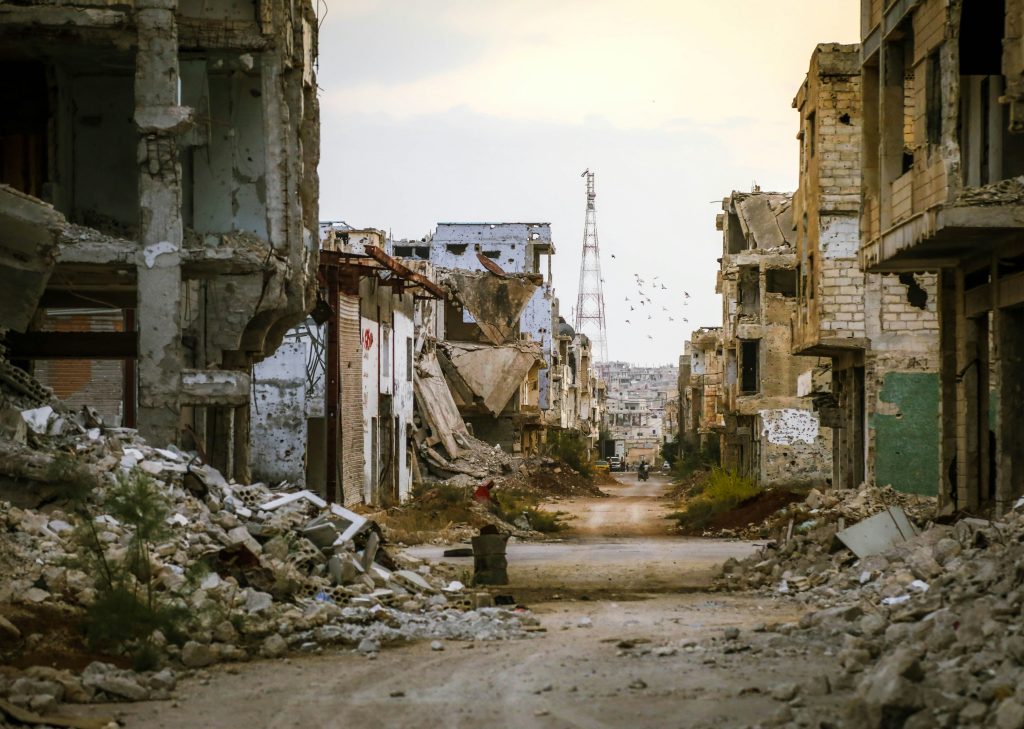
Mirna Barq, President of Syrian Christians for Peace, placed the scale of the catastrophe in stark relief. More than half a million lives have been lost. Over fourteen million people have been displaced, contributing to a global refugee population of forty million. With roughly seventy percent of Syria’s infrastructure destroyed and ninety percent of the population living in poverty, many Syrians who long to return home remain unable to do so.
Despite this devastation, Barq pointed to signs of possibility. She recalled a historic gathering of seventy Syrian clergy representing diverse religious traditions—an unprecedented exercise in coexistence that she described as a model for the country’s future.
“People may not want Western politics or Christian doctrine—but they do want peace. And faith communities can offer it through presence and service.”
Experiencing Syrian Hospitality and Hope
Roberts and his colleagues confessed that they had been uncertain how a Baptist pastor and an imam from the United States would be received in Syria. The warmth of the welcome exceeded their expectations. Imam Magid described Syria as a beautiful country filled with people deeply committed to rebuilding their lives. He had witnessed Muslims, Christians, Druze, and Alawites sitting together with genuine hospitality and a shared sense of purpose.
Roberts reflected that multifaith cooperation opens doors that single-faith efforts cannot. Nadine Maenza—Co-Chair of the IRF Roundtable and Chair of the Institute for Global Engagement, who has traveled to Syria more than a dozen times—described how humanitarian work restores dignity in ways that outlast the immediate relief, citing wells drilled in agricultural communities in the Khabur Valley that had allowed farming families to remain in their homeland rather than flee. She also noted that years of political manipulation had sown fear between religious communities, making social cohesion not merely a moral ideal but a practical necessity for Syria’s recovery.
Building Peace Through Relationships and Practical Support
Roberts outlined two initiatives operating in tandem in Syria and beyond. The Multifaith Neighbors Network focuses on grassroots relationship-building among clergy, enabling trust to develop that reduces fear over time. The Institute for Global Engagement addresses structural questions of rule of law and constitutional protections, grounded in the conviction that peace requires not only a tolerant culture but laws that protect everyone.
Suhail, a longtime observer of Syrian affairs, stressed that lasting peace depends on rebuilding capacity across all of Syria’s communities—Christian, Muslim, Alawite, Druze, and Kurdish alike. He emphasized the important role that American leaders and the Syrian diaspora can play in supporting that process.
A Call to Local Action
Roberts concluded with a challenge directed not only at the conference room but at religious leaders everywhere. Clergy cannot negotiate treaties, but they can create the conditions in which peace becomes possible—by building trust, reducing fear, and modeling the kind of relationships that make coexistence imaginable. The fact that many Syrians continue to ask Roberts and his colleagues to return, he said, is itself a sign of what interfaith solidarity can accomplish.
He invited pastors and community leaders in the room to ask themselves a harder version of the same question: How are they fostering peace in their own neighborhoods?
– – –
Marianna Richardson is the Director of Communications for the G20 Interfaith Forum. She is also an adjunct professor at the Marriott School of Business at Brigham Young University.