
By Arthur Lyon Dahl Ph.D., President of The International Environment Forum
– – –
This opinion piece was previously published on November 23rd, 2025 on the International Environment Forum website and is being republished with permission. See the original article here.
The planet is already well into an unfolding climate change crisis that is imposing rapidly growing costs: financial, social and environmental, on an increasingly fragile global human system. We are totally interconnected through technology and trade without any equivalent effective global governance. The thirtieth Conference of the Parties to the UN Framework Convention on Climate Change (COP30) in Belém, Brazil, 10-22 November 2025, clearly illustrates the present paralysis that we face between two extremes: protecting business-as-usual for those with wealth and power, or making a rapid transformation in governance to correspond to this new global reality that we are one human family.
The planet is telling us that there is no time to lose. Extreme weather events and associated impacts: storms, floods, drought, excessive heat, forest fires, landslides, rising seas, dying coral reefs, collapsing biodiversity, etc. are undermining the life-supporting capacity of the planet to meet our most fundamental needs. We are already overshooting some tipping points beyond which positive feedbacks accelerate an irreversible decline. The science says we need to immediately reverse course and we have only a decade before our future wellbeing will be threatened and the costs to adapt greatly increased, by some estimates up to half of global GDP in the decades ahead. Emissions of greenhouse gases must fall by half by 2030 compared to 2010 levels, and reach net zero by mid-century.
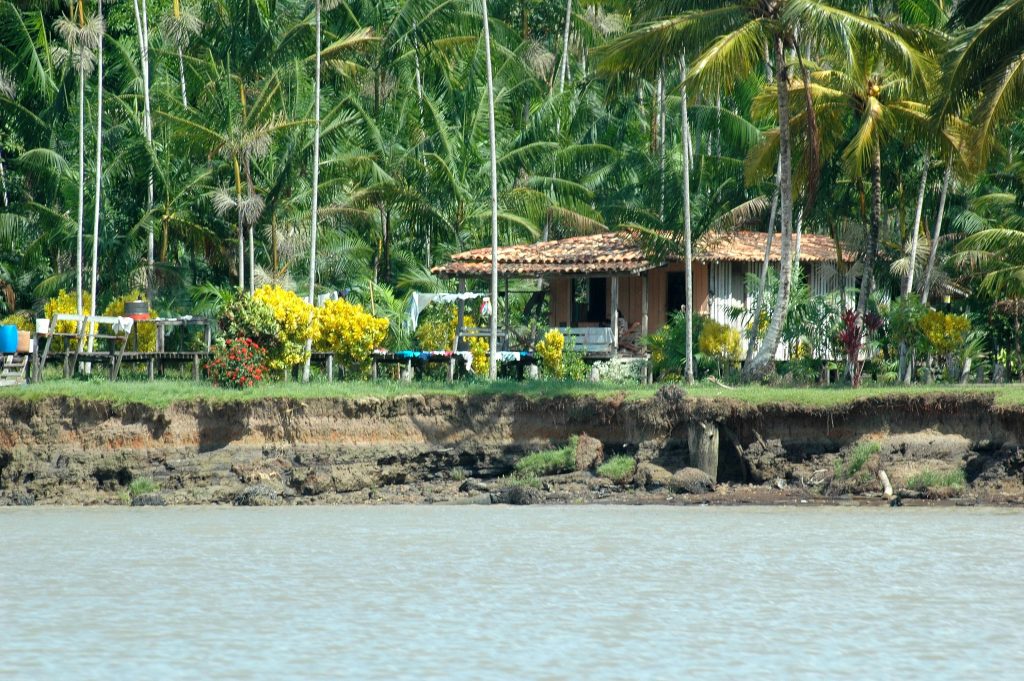
Ambitions at COP30
With thirty years of commitments and promises behind it, COP30 aimed to be the action COP focussed on implementation. This would include stronger national emissions reduction plans, ways to handle climate-related trade disputes, and increased financial support for poorer countries. Given the urgency of keeping 1.5°C within reach, a Global Stocktake was intended to bridge the chasm between the cuts in carbon emissions needed and those being pledged. This meant strengthening the weak Nationally Determined Contributions (NDCs) required by the Paris Agreement now that we have already broken the 1.5°C threshold.
One tool was to be a Transition Away from Fossil Fuels (TAFF) Roadmap. More than 80 countries from Africa, Asia, Latin America and the Pacific joined with EU member states and the UK to call for a clear plan for phasing out fossil fuels. By building trust in climate finance, the hope was that money would flow. A Global Goal for Adaptation was to provide a just transition to lift up communities rather than deepen inequality. Justice was to be the starting point, not an afterthought. Indigenous peoples hoped for their direct participation in negotiations, such as already agreed in the Convention on Biological Diversity.
A week-long parallel “people’s summit” in the Amazonian city brought together 70,000 people, including 23,000 registered participants from more than 65 countries. It called for an end to the privatisation, commodification, and financialisation of common goods and public services that directly contradict popular interests. It recognised air, forests, water, land, minerals, and energy sources as “common goods of the people”, and demanded the demarcation and protection of indigenous lands and territories, with an end to deforestation. It promoted the implementation of popular agrarian reform and agroecology, the fight against environmental racism and the construction of just cities and vibrant peripheries through the implementation of environmental policies and solutions. These hopes were far from the interests of the negotiators.
Results of COP30
The results of COP30 fell far below these expectations. While coming close to collapse, the talks finally delivered a deal, showing that multilateral cooperation between 194 states can work even in a world in geopolitical turmoil. But the final text made no mention of fossil fuels. On the emissions gap, only weaker measures were agreed, with an “accelerator” programme to address the shortfall which will report back at next year’s COP. One step forward was to agree to triple adaptation finance to $120bn a year by 2035, five years later than originally envisaged. There was consensus on the operational procedures for the Loss and Damage Fund. The ocean was finally recognised as a vital part of climate solutions, central to climate mitigation, adaptation, and stabilization.
One significant advance was the agreement to a Just Transition Mechanism, the purpose of which will be to enhance international cooperation, technical assistance, capacity-building and knowledge sharing, and enable equitable, inclusive, just transitions. This plan agreed by all nations will ensure that the move to a green economy around the world takes place fairly and protects the rights of all people, including workers, women and indigenous people, but with no funding provided. It will include a permanent institutional arrangement under the UNFCCC to support countries in their efforts towards a transition away from fossil fuels.
On the other hand, provisions on the exploitation of “critical minerals” were blocked by China and Russia. The fossil fuel states and industry lobbyists used the consensus rule to block essential action and ambition that might hurt their interests. The COP presidency was obliged to propose actions outside the COP framework to allow willing countries to keep moving forward.
To do this, the COP president announced two road maps, one to end deforestation and one to transition away from fossil fuels in a just, orderly and equitable manner. However, these are not part of the UN process, and therefore not backed by all 195 countries. Nonetheless, with around 90 countries backing both, there is hope they could help push action forward. A planned first conference on the phase out of fossil fuels is scheduled to take place in Colombia next April.
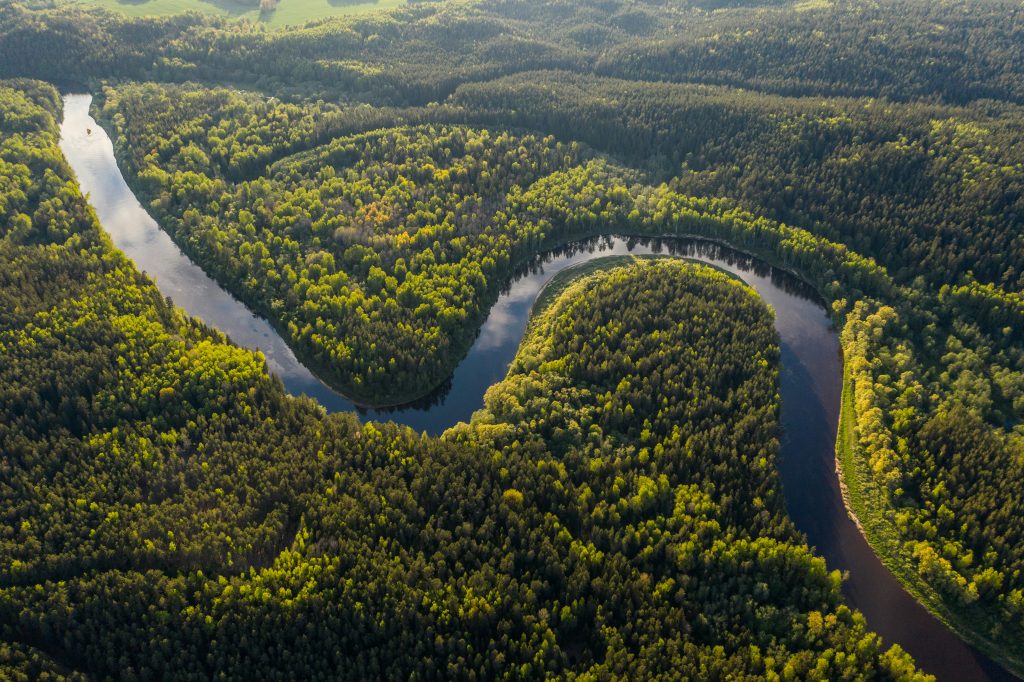
Despite meeting in the Amazon, the final text makes only one mention of rainforests in the preamble. A roadmap on ending deforestation was killed because it was tied into a roadmap on ending dependency on fossil fuels, which was blocked by Saudi Arabia and other oil-producing nations in the Middle East. The Brazilian government announced the creation of a Tropical Forests Forever Facility (TFFF), an investment fund that will pay nations to keep trees standing. There is a pledge to intensify wildfire prevention strategies in response to record tropical forest losses and increasing fire risks driven by climate change, using community-based approaches, with a renewed focus on prevention rather than emergency response alone. Efforts will include cross-border cooperation, increased funding and the formal recognition of the critical role of local and Indigenous communities in managing and preventing wildfires. Over 35 funders at COP30 committed USD 1.8 billion to advance land and forest tenure for Indigenous Peoples, Afro-descendant Peoples, and local communities—recognizing that effective climate action starts with those who safeguard these territories. Brazil also announced the creation of 10 new indigenous territories, marking a significant victory for indigenous groups.
Turkey will host COP31 next year in Antalya, with Australia leading the actual negotiations. This could involve an event on a Pacific island before the summit to pledge money for a Pacific resilience fund.
Extreme Polarization
These weak results dashed so much effort and hope. The climate catastrophe will not wait, and every delay means more environmental destruction and human suffering.
The implacable opposition of Saudi Arabia, the United Arab Emirates, Russia and India to any language on transitioning away from fossil fuels (agreed by all countries at the COP two years ago) reveals an increasingly bitter conflict at the heart of global climate politics. It is between those who accept the scientific fact that to deal with climate change the world must rapidly wean itself off fossil fuels; and those who are actively resisting this in pursuit of their short term energy interests. They are under the control of fossil fuel states, and companies that had 1,602 lobbyists present in Belém. It is now increasingly recognised that capitalism and nationalism prioritising profit and power over the common good are the main causes of the growing climate crisis.
The refusal to allow any mention of fossil fuels, despite 82 countries from across the globe coming together to back a roadmap for the transition away from them, shows how wide the gap is. These include small island states, which are existentially threatened by rising sea levels and stronger storms. For them, it is an extreme injustice. They led to the International Court of Justice’s ruling earlier this year that countries have an obligation to align their policies with the Paris Agreement target to limit emissions to 1.5°C. This is a legal benchmark, and countries are failing their legal duties. Without a commitment to a full and equitable fossil fuel phaseout and adequate public climate finance, this COP30 deal disregards the law.
We now need to reform the UNFCCC and remove the consensus rule to allow majority voting, so the global majority can act, and also to adopt conflict of interest rules. To respond to the need for some sort of multilateral mechanism, there is an initiative for a Fossil Fuel Non-Proliferation Treaty, bringing nations, indigenous communities, civil society actors and others together to draft a treaty.
Simon Stiell, the UN Climate Change Executive Secretary, issued a written statement reflecting on the outcome of the talks:
“We knew this COP would take place in stormy political waters. Denial, division and geopolitics has dealt international cooperation some heavy blows this year. But friends, COP30 showed that climate cooperation is alive and kicking, keeping humanity in the fight for a liveable planet, with a firm resolve to keep 1.5°C within reach. I’m not saying we’re winning the climate fight. But we are undeniably still in it, and we are fighting back.… For the first time, 194 nations said in unison: ‘…the global transition to low greenhouse gas emissions and climate-resilience is irreversible and the trend of the future.’ This is a political and market signal that cannot be ignored.”
– – –
Dr. Arthur Lyon Dahl is a distinguished environmental scientist and international policy expert who currently serves as President of the International Environment Forum. With a biology background from Stanford and UC Santa Barbara, he specialized in coral reefs and small island ecosystems, spending significant time conducting research in the Pacific Islands and Africa before making Geneva, Switzerland his home. His five-decade career includes serving as a senior official at UN Environment and participating in major UN environmental conferences from Stockholm 1972 to Paris 2015, including a key role in the 1992 Earth Summit. Dr. Dahl’s expertise spans sustainability, environmental assessment, and systems science, leading him to consult for prestigious organizations like the World Bank, World Economic Forum, UNESCO, and UNEP. He maintains an active role in environmental education through widespread teaching and lecturing, both in person and online. His contributions to environmental thought and policy are captured in his books, including “Unless and Until: A Baha’i Focus on the Environment” and “The Eco Principle: Ecology and Economics in Symbiosis,” which reflect his integrated approach to environmental challenges.