

By Hugh Locke, President and Co-Founder of Futurra and Smallholder Farmers Alliance
– – –
This piece was previously published in stages on November 11th and 17th, 2025 on the International Environment Forum website. It is being republished with permission. See the original article here.
Who Gets to Define Regenerative Agriculture?
And Why It Matters More Than You Might Think
At Climate Week NYC this past September and continuing during COP30 in Brazil, there is one very large and looming issue that is getting scant attention. Lurking at the edge of the laudable surge of interest, support and commitments around regenerative agriculture is a fundamental question that threatens to undermine the entire movement: who gets to define what regenerative agriculture actually means?
This is not an academic debate. The answer to this question will determine whether regenerative agriculture fulfills its promise to transform our food system and address climate change, or whether it becomes just another marketing term emptied of meaning by the same forces it was meant to challenge.
The Place-Based Paradox
Any serious conversation about regenerative agriculture must start with the core principle that there is no one-size-fits-all approach. What regenerates land in the temperate grasslands of Montana looks different from what works in the tropical forests of Costa Rica or the smallholder farms of Kenya. Context matters. Soil type, climate, water availability, cultural practices, and local ecosystems all shape what regenerative looks like on the ground.
This place-based approach is not optional. It is fundamental to the philosophy of regenerative agriculture. The whole point is to work with nature rather than imposing uniform industrial methods that ignore local conditions. Regenerative agriculture asks farmers to become students of their own land, to observe and adapt rather than follow a prescribed playbook.
But therein lies the paradox. This very flexibility creates confusion in the marketplace and opens the door to practices that may improve one metric while ignoring others. Without some shared understanding of what regenerative means, how do consumers know what they are buying? How do investors know what they are funding? How do we prevent the term from being stretched so thin it loses all meaning?
The Cherry-Picking Problem
We are already seeing this play out in troubling ways. Some large-scale operations are claiming the regenerative label while cherry-picking only the practices that fit within their existing industrial model.
Take the example of massive monoculture operations that plant thousands of acres of a single crop, add cover crops to the rotation, and then claim they are regenerative because their soil organic matter is improving. Yes, cover crops build soil health. But when these same operations continue to rely on synthetic fertilizers and pesticides, when they grow genetically modified crops designed to withstand herbicide applications, when they operate at a scale that eliminates biodiversity rather than enhancing it, can we honestly call this regenerative?
Or consider the debate over GMOs. While they are explicitly banned under current regulations for certified organic produce, some farmers argue that because their soil tests show increased carbon sequestration, their use of herbicide-resistant crops should be considered regenerative. They point to reduced tillage and improved soil metrics. But this ignores a crucial reality that GMO crops are specifically designed to enable heavy chemical use. The most common genetically modified crops are engineered to survive applications of glyphosate and other herbicides that would kill conventional plants. The whole system depends on synthetic inputs.
This matters because allowing GMOs and heavy chemical dependency under the regenerative banner fundamentally contradicts what most serious practitioners and researchers understand regenerative agriculture to be about. It is not just about one metric like soil carbon. It is about building entire systems that regenerate rather than degrade.
Who Holds the Definitional Power?
So who gets to decide what counts as regenerative? Right now, multiple actors are competing for this authority, and the outcome is far from certain.
Government agencies are beginning to weigh in. California recently finalized a definition for state policies and programs after a two-year public process that included listening sessions and work groups. While this represents an attempt at democratic input, the resulting definition is intentionally broad, describing regenerative agriculture as a continuous journey rather than a fixed endpoint. Critics worry this vagueness will allow industrial operations to claim the label with minimal changes to their practices. Supporters argue it provides an entry point for thousands of farmers to begin improving their methods.
Similar efforts are underway in Europe. In June 2025, the European Economic and Social Committee became the first official EU body to explicitly recognize regenerative agriculture as a core strategy for transforming European food systems. Their definition describes it as “an adaptive, outcome-based farming approach applying practically proven and science-based methods with positive impacts on the environment, on farming communities’ livelihoods and on public health.” The European Academies Science Advisory Council has recommended that regenerative agriculture be prioritized by member states when implementing the region’s Common Agricultural Policy. Business coalitions are calling for EU-level outcome-based definitions with clear performance indicators. What is striking about these developments is that government bodies across different continents are gravitating toward similar language about outcomes and adaptability, while still wrestling with how specific or flexible the definitions should be.
A significant initiative launched at COP26 in 2021 aimed to address this definitional challenge. Regen10 (www.regen10.org) was formed with the explicit goal of putting farmers at the center of food systems transformation. One of its three core interventions was to “establish harmonized definitions, outcomes and metrics” for regenerative agriculture.
Yet four years later, Regen10 has published an outcomes-based framework rather than a clear definition. While the framework provides guidance on measuring environmental, social, and economic outcomes, it deliberately stops short of prescribing what practices constitute regenerative agriculture. This approach reflects a philosophical stance that regeneration should be defined by results rather than methods. But it also leaves a critical gap. Without some shared understanding of boundaries and non-negotiables, the term remains vulnerable to capture by those who would stretch it to fit practices that contradict its fundamental principles. The paradox deepens: the very effort designed to create alignment has reinforced the flexibility that enables definitional confusion.
Corporations are also shaping the definition through their purchasing commitments. When a major food company announces plans to source ingredients from millions of acres of “regenerative” farmland, the standards they set become de facto definitions with enormous market influence. Some of these corporate definitions are robust and demanding. Others seem designed primarily to allow existing suppliers to qualify with minimal disruption to current practices.
Meanwhile, farmer-led networks resist top-down definitions altogether. They argue that regenerative agriculture is fundamentally about observation, adaptation, and continuous improvement within local contexts. Trying to codify it into a checklist misses the point entirely.
Each of these approaches has merit. Each also has limitations. The question is not which single definition will prevail, but rather how we prevent the term from being captured by actors whose primary interest is marketing rather than genuine transformation.
Lessons from the Organic Precedent
We have been here before. The evolution of organic agriculture offers both instructive lessons and stark warnings.
In the 1970s and 1980s, organic farming existed as a patchwork of state and private certification programs. Consumer confusion and concerns about fraud led the organic industry itself to petition the United States Congress for federal standards. After more than a decade of debate, the National Organic Program was established in 2002.
But the path to federal standards revealed deep conflicts. When the US Department of Agriculture (USDA) released its initial proposed rules in 1997, they included provisions that would have allowed genetically modified organisms, irradiation, and sewage sludge in organic production. The organic community erupted. More than 275,000 people submitted comments, the most the USDA had ever received. The outcry forced the agency to reverse course and prohibit what became known as the “big three.”
This moment demonstrated that massive public engagement can defend standards against government and industry pressure. It also revealed how easily definitions can be diluted by powerful interests if vigilance lapses.
And that vigilance has indeed lapsed. Today, many in the organic movement argue that federal standards have been steadily weakened. Large-scale operations with thousands of confined chickens qualify as organic with minimal outdoor access. Hydroponic operations that never touch soil receive organic certification. Dairy operations continuously bring in non-organic cows to boost production. Corporate consolidation has led to what critics call “industrial organic,” where the letter of the law is met while the spirit is lost.
The result has been the emergence of add-on certifications like the Real Organic Project, created by farmers who concluded that the USDA organic label no longer represents what they consider authentic organic agriculture. These farmers are essentially starting over, building new standards on top of the federal baseline.
The lesson is sobering. Federal standardization enabled the organic market to grow from a fringe movement to a multibillion-dollar industry, but that very success attracted corporate interests that have, in many cases, transformed organic from a radical alternative into something uncomfortably close to what it was meant to oppose.
Will regenerative agriculture follow the same trajectory?
The Global Dimension
These definitional battles play out differently across the world, and we need to be mindful as to how standards developed primarily in the Global North might affect farmers in the Global South.
In wealthy countries, the regenerative agriculture conversation often focuses on transitioning large-scale commodity agriculture away from chemical dependency. The question is how to make industrial farming less destructive.
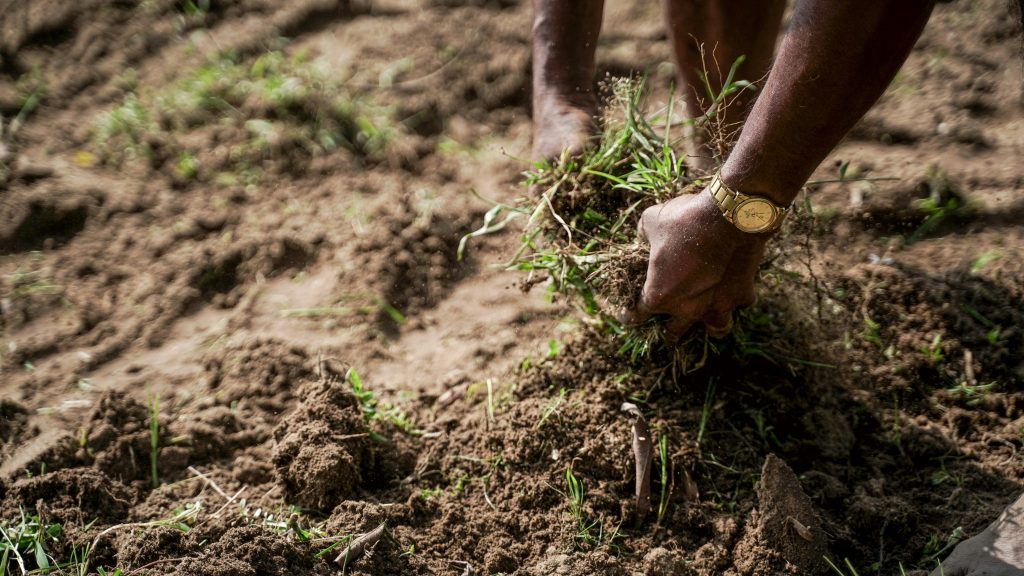
In much of the Global South, the situation is fundamentally different. Millions of smallholder farmers already practice many regenerative techniques by necessity. They intercrop because it reduces risk. They save seed because purchased inputs are expensive. They maintain diverse farming systems because that is how their families have farmed for generations. They integrate livestock and crops because the synergies make economic sense.
Yet these farmers often lack access to markets that would reward their practices. They face pressure to adopt industrial methods as a condition of credit or participation in value chains. International development programs sometimes still promote the very chemical-intensive approaches that regenerative agriculture seeks to move beyond.
If regenerative standards are defined primarily by and for large-scale operations in wealthy countries, we risk creating outcome verification systems that are too expensive or bureaucratically complex for smallholder farmers to access. We could inadvertently exclude the very people who have the most to teach us about regenerative practices.
At the same time, some of the most innovative regenerative agriculture happening anywhere is emerging from partnerships between smallholder farmers and organizations committed to agroecological approaches. These initiatives often combine indigenous knowledge with contemporary science, creating farming systems that are genuinely regenerative while also improving farmer livelihoods.
The challenge is to develop frameworks that honor this diversity rather than imposing uniformity. This means ensuring that smallholder farmers in the Global South have a voice in how regenerative agriculture is defined, not just in how it is practiced.
What Is at Stake
The question of who defines regenerative agriculture is ultimately about power. Will farmers, communities, and independent researchers shape these definitions? Or will corporations, government bureaucracies, and industrial agriculture interests capture the term and bend it to serve their purposes?
The stakes could not be higher. Agriculture is responsible for roughly a quarter of global greenhouse gas emissions. The way we grow food is a primary driver of biodiversity loss, soil degradation, and water pollution. If regenerative agriculture is to address these crises, it must represent genuine transformation, not incremental tweaks to business as usual.
We need definitions that are flexible enough to respect local contexts while rigorous enough to prevent greenwashing. We need standards that can scale to feed billions of people while remaining true to ecological principles. We need outcome verification models that are accessible to smallholder farmers while maintaining credibility with consumers.
This is not easy. Perhaps it is impossible to achieve perfectly. But we have an obligation to try.
The organic precedent suggests that once definitions become codified in law and captured by large economic interests, they become very difficult to reform. The time to shape how regenerative agriculture is defined is now, while the movement is still young enough to be influenced by voices beyond the corporate boardroom.
This means engaging in the public processes that are defining regenerative agriculture at the state and federal level in various countries. It means moving away from prescriptive certification of practices to the outcome verification of results actually achieved. It means being willing to challenge corporate claims that use regenerative language while maintaining fundamentally extractive practices.
Most importantly, it means remembering that regenerative agriculture is not just a set of techniques. It is a commitment to healing the relationship between farming and the land, between production and ecology, between human communities and the natural systems that sustain us all.
Who gets to define what that means will play a key role in shaping the future of food. We should all pay attention to how this unfolds.
– – –
Hugh Locke received his degree in Environmental Studies from the University of Manitoba. He serves as President and co-founder of Futurra, an organization that redesigns supply systems to build regenerative models for agricultural sustainability. He is also President and Co-Founder of the Smallholder Farmers Alliance in Haiti where he uses agroforestry to feed and reforest their island country. Additionally, he serves on the Board of One Tree Planted, a global reforestation nonprofit committed to environmental restoration and sustainable land management practices. His research focuses on how big data and technological innovations can enable a revolution in both sustainable supply chains and regenerative agriculture.