

By Marianna Richardson, Director of Communications for the G20 Interfaith Forum (IF20)
———
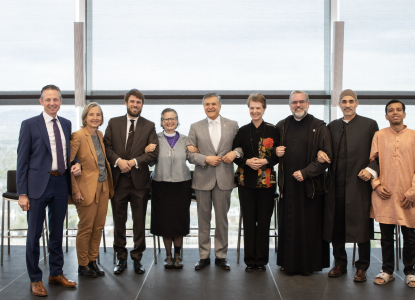
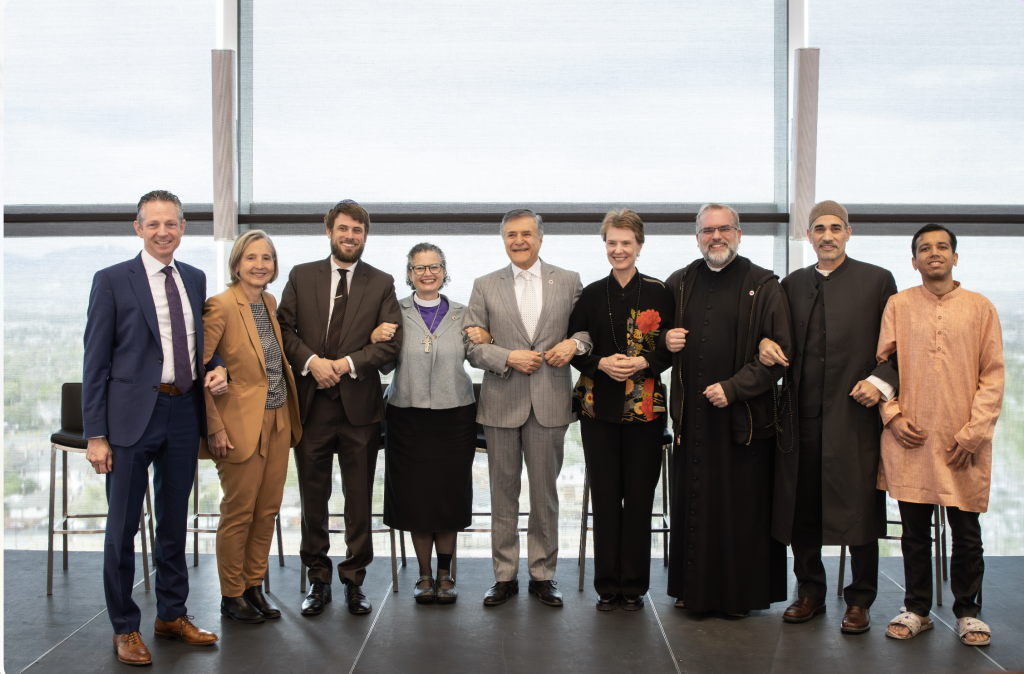
The Kindness Summit, sponsored by One Kind Act a Day which is a project from the Semnani Family Foundation, brought together religious and governmental leaders from across the greater Salt Lake City area. Since the G20 Interfaith Forum will be in Salt Lake City this year, IF20 was invited to attend the Summit. The speakers at the Summit included a panel of Salt Lake religious leaders, a panel of prison inmates incorporating kindness in the prisons, Curtis Morley, a renowned speaker and writer, Pres. Taylor Randall, president of University of Utah, and Pres. Camille N. Johnson, the General Relief Society President for The Church of Jesus Christ of Latter-day Saints. Finally, the Kindness Summit awarded One of a Kind Awards to people who exemplify kindness in the community.
Dignity as a Universal Moral Foundation
The Kindness in Religion Panel highlighted the unique interfaith strength of Salt Lake City, where diverse traditions work side by side. Although most Americans believe people should be treated with dignity, far fewer feel that dignity is practiced in daily life. Speakers emphasized that kindness is rooted in shared human dignity, a value affirmed across faiths and central to the University of Utah’s human dignity initiatives. Religious leaders from Buddhist, Jewish, Muslim, Catholic, Hindu, Episcopal, and Latter‑day Saint traditions each offered perspectives. Buddhist teachings call for “first thought, best thought” when thinking about individuals. Islamic teachings link dignity with generosity, focusing on helping those in need. Jewish stories teach about the importance of respectful disagreement between people and societies. Christian religions look to Jesus Christ as the model of dignity, empowerment, and compassion.
Speakers stressed that kindness is not passive but a disciplined, emotionally mature response to conflict and division. Local acts of kindness can counter global instability, strengthen communities, and elevate public life. Participants urged voters to support leaders who uplift rather than demean, placing kindness at the center of civic engagement.
Curtis Morley: Kindness vs. Niceness
Curtis Morley distinguished kindness from niceness, noting that “nice” avoids truth while “kindness” seeks another’s growth. In the New Testament, the word “nice” is not mentioned once, but the word “kind” is mentioned over 400 times. Nice comes from the root word that means “ignorant.” We have a tendency to placate, to not share our real feelings, or to manipulate others when we are nice. Kindness requires that we connect with humanity and see the divinity in others. Our conversations center on the other person rather than ourselves. Kindness still requires boundaries, but encourages empathetic listening, and a genuine invitation to dialogue. Rather than divisiveness, kindness listens to understand, not to respond to another person. Kindness leans us into connection with and love for others, while nice leans us away from others. Curtis expressed his own experience from being nice to being kind. His fundamental change has opened up his heart to others and he invited everyone listening to him to do the same.
President Taylor Randall: Kindness as Daily Practice
President Taylor Randall of the University of Utah emphasized that kindness is most powerful when practiced through small, consistent actions. He honored Joyce Thorston, a beloved staff member at University of Utah, who was known for her generosity and compassion, and whose quiet acts of service shaped the lives of countless students. Alumni described how Joyce transcended bureaucracy, offering help, encouragement, and belonging. Pres. Randall argued that society’s “recipe” for kindness rests on three principles: cultivating awareness of others, valuing small gestures over grand ones, and practicing gratitude. These ideas inspired the creation of a student chapter promoting “one kind act a day.”
Kindness in Prisons
A highlight of the conference was a panel of inmates at the Utah Correctional Facility who described the transformative impact of kindness within the prison. A ten‑week “kindness matters” class encourages inmates to greet one another, notice emotions, and share “kindness cards.” These simple practices have improved relationships among inmates and officers, creating a more humane atmosphere. These small, daily acts of kindness have helped participants reclaim dignity. Many inmates expressed a desire to change, serve their families, and be seen as more than their past mistakes. They also pled with the people of Salt Lake City to give them another chance and be kind to them when they return to be a part of their community.
President Camille Jonson: Kindness as a Spiritual Discipline
Camille Johnson, Relief Society General President of The Church of Jesus Christ of Latter‑day Saints, reflected on kindness as a deeply personal and spiritual practice. Drawing on her 30‑year legal career, she explained that,
Kindness, like law, is something one practices imperfectly but intentionally until it becomes a part of their nature.
She linked kindness to the universal Golden Rule, found across world religions, and taught that Jesus Christ taught His followers not only to love peace but to make peace.
Sister Johnson shared stories of young people in Gaza who, despite displacement, formed peer groups to care for children, prevent conflict, and support the elderly. Their actions demonstrate that kindness and peacemaking can flourish even amid hardship. She concluded that children are naturally kind, and adults must nurture that instinct so kindness becomes a defining habit in families, schools, and communities.
Sister Johnson described a remarkable global consortium effort that united NGOs previously competing for limited funding. By working together, these organizations dramatically expanded their reach. She said,
42,000,000 women and children have received vitamins… 23 million children… were dewormed and three and a half million children were screened for malnutrition.
Cooperation allowed resources to stretch further, as shown in Nepal where one NGO screened children while another used government contacts to connect families to services. This demonstrated that “when we work together and we can do so much more.” Leaders from Vitamin Angels and Helen Keller International now travel together, sharing best practices and building friendships—an example of how collaboration replaces competition.
Sister Johnson further emphasized that overwhelming global challenges become manageable when approached through individual acts of service. In Uganda’s remote Karamoja region, women learned nutrition, screening, and health‑care practices under a tree‑based “health fair.” Village health teachers then “travel on foot to the next mud and manure hut and shared what they had learned.” Despite hardship, these women were joyful, capable, and motivated to improve their communities.
The Relief Society encourages members worldwide to support women and children through simple actions, such as reading with a child, helping women access prenatal care, or mentoring someone toward self‑reliance. Sister Johnson concluded that for each one of us,
the most important work… is to recognize the needs of those that are closest to me and respond… with kindness and patience and love.
The Power of Small Contributions
The One of a Kind Awards were given to four individuals and one organization for their community contributions to kindness. Ballet West blesses the community through education and outreach programs which reach over 100,000 people per year. Captain Sasa Karic who works in law enforcement, helped to institute the SOLID (Successful Offenders Learning Individual Development) program for inmates in a more therapeutic setting to encourage them to become better citizens. He sets an example through his words of kindness to others. Tim Olsen works at Summit Global Investments but also creates service events centered around kindness. Linda Dobbins and Autumn Songer Porter lost a son and a father in a senseless act of violence. Through a long, painful journey, they have extended forgiveness to the person who killed their loved one. They feel that their kindness honors the memory of their son and father.
In conclusion, the Kindness Summit was a celebration of what it means to be kind. If we draw on the metaphor of honeybees, each individual bee contributes only 1/12th of a teaspoon of honey for the hive. In the same way, individual acts of kindness, repeated over a lifetime, sustain families, communities, and nations.
Let’s all try to be kind rather than nice and do one act of kindness every day to lift the world from divisiveness and hate. Please feel free to commit to doing one kind act a day by taking the Pledge of Kindness. Take the pledge – The Power of Kind
———
Marianna Richardson is the Director of Communications for the G20 Interfaith Forum (IF20), where she works at the intersection of faith and global policy. She has chaired sessions on technology and ethics at G20 Interfaith conferences, including the Technology and Ethics session at the 2023 G20 Interfaith Summit in Pune, India, and has written extensively on AI, food security, human rights, and other pressing global issues for the IF20 blog. She is also an adjunct professor in management communication at the Marriott School of Business at Brigham Young University, where she serves as editor-in-chief of the Marriott Student Review, a student-run peer-reviewed journal.