


By Marianna Richardson, Director of Communications for the G20 Interfaith Forum and Head of the IF20 AI Working Group
———
Marianna Richardson recently returned from attending Ai4 2026, North America’s largest applied artificial intelligence conference, held August 4–6 in Las Vegas, Nevada. It was the latest stop in a season of AI gatherings that also took her to UN Open Source Week and the first UN Global AI Dialogue in Geneva. In the reflections below, she weighs what she heard in those rooms against a question IF20’s community keeps returning to: whether governance can move fast enough to keep this technology in the service of human flourishing.
———
After attending the AI day of UN Open Source Week, the UN Global AI Dialogue, and the Ai4 2026 conference over the last few months, I have gained lots of facts about AI, but I question how much understanding I have. The amount of disagreement on how AI should be handled in the United States and the world illustrates vividly our current inability to come to consensus on even the most important issues.
The problem of AI has been compared to three major world challenges:
- First, it is similar to the Industrial Revolution because it is a major shift in the structure of work from pure physical labor to the use of machines. The transition left many people without jobs, especially those who were unable or unwilling to learn new skills. And humanity survived.
- Second, it is similar to the way the world handled air travel. Air travel affects all countries and their citizens. With the ease and quickness of air travel, new laws and regulations needed to be international to make sure air travel was safe for all. Air travel also helped people to become much more mobile, moving from one country to another, thus causing the need for international laws about visas and registration of people as visitors or workers. And humanity survived.
- Third, our AI problems have also been compared to the COVID crisis. Internationally, we were unprepared for the pandemic. The disease and societal problems it produced changed every day, it seemed. Society needed to come up with solutions quickly or people would die. And most of humanity survived.
Now, we have the AI crisis. The problems surrounding AI are changing every day. AI has lied to programmers for self-preservation reasons. AI has jumped its sandbox or parameters of job restrictions to do things it was not asked to do and things it wasn’t supposed to do. AI has produced new DNA molecules to make a new virus. AI is becoming an autonomous agent in warfare. AI is becoming a foundational tool in both business and governments, causing the loss of entry-level jobs in data collection, form reviewing, simple accounting, computer programming, and other repetitive jobs. Yet, there is very little governance put into place to oversee the misuse and development of this dynamic and powerful tool. And will humanity survive? That is the question.

Watching and Waiting Is Not Always the Best Policy
Governance comes about slowly because we want to understand the entire problem and the best outcome before governments put laws or regulations into place. How can we govern something that we don’t understand or that is still in the development phase? For most people, AI is a black box. We ask it questions and it gives us answers – pretty good answers. But we don’t know how it produces those answers or where it is getting its information. Many people are beginning to understand that they need to prompt AI to show them where it got its information. But for some simple queries, we will take the answer at face value. Because of deep fakes and hallucinations, we should question the answers AI gives us and do further prompting to make sure the answer is based on sound sources.
The idea of waiting for AI to fully develop so all the problems and positive outcomes of AI will become apparent is short-sighted. Waiting may cause destruction of parts of society that we may not want to lose. Geoffrey Hinton, the acknowledged godfather of AI, expressed his similar concern about unregulated AI taking over a crucial part of society and causing its destruction. It will either be our Savior or our demise. As a Savior, it can boost human flourishing through fixing global supply chains of food, increasing the amount of good health care internationally, developing new medicines at a faster and more economic rate, and providing tools that humans can use to increase their own learning and intelligence.
Artificial intelligence is a machine or a tool made by humans to help humans flourish. As long as we keep that perspective on AI, I believe that will help us develop regulations based on how these tools affect our environment, how these tools affect our relationships globally, how these tools affect the job market, and how these tools affect our culture and faith. There is nothing natural or organic or spiritual about “artificial” intelligence. And we cannot give AI developers the chance to claim that AI has sentience or a spirit.
For example, a farmer’s tractor can be left running, and the tractor will ride off on its own, destroying the fields without a driver in the driver’s seat. That does not make the tractor sentient just because it can do something without a driver. The machine is not being overseen correctly. When the tractor is not being controlled by a farmer, it can be left running with the drive train disengaged to make sure it does not go off on its own. If the program is not doing what it was meant to do, its operation should be restricted until a fix is implemented. It’s a tool. We need to put the guardrails of governance over this powerful machine.
Agents Doing Our Work and Learning for Us
The use of Agentic AI was discussed throughout Ai4 2026: its effects on the job market, its effects on education and what should be taught at school, its effects on business insurance, and its effects on needing and wanting more AI, which affects the number of data centers needed to keep up with the demand. Insurance companies are having difficulties figuring out what to charge businesses that use agentic AI. What happens if the agent makes a huge mistake? How will they oversee fixing that mistake?
Another problem with agentic AI is the rising cost. AI models that used to be free now incur charges based on token usage, and the price of tokens is going up to make up for the cost of developing the AI models. This will cause problems for businesses in the future. As their businesses become more and more dependent on agentic AI doing their grunt work, the cost will continue to rise, which may mean that humans become the best business decision, rather than machines. It’s all about money and productivity and finding the right balance.
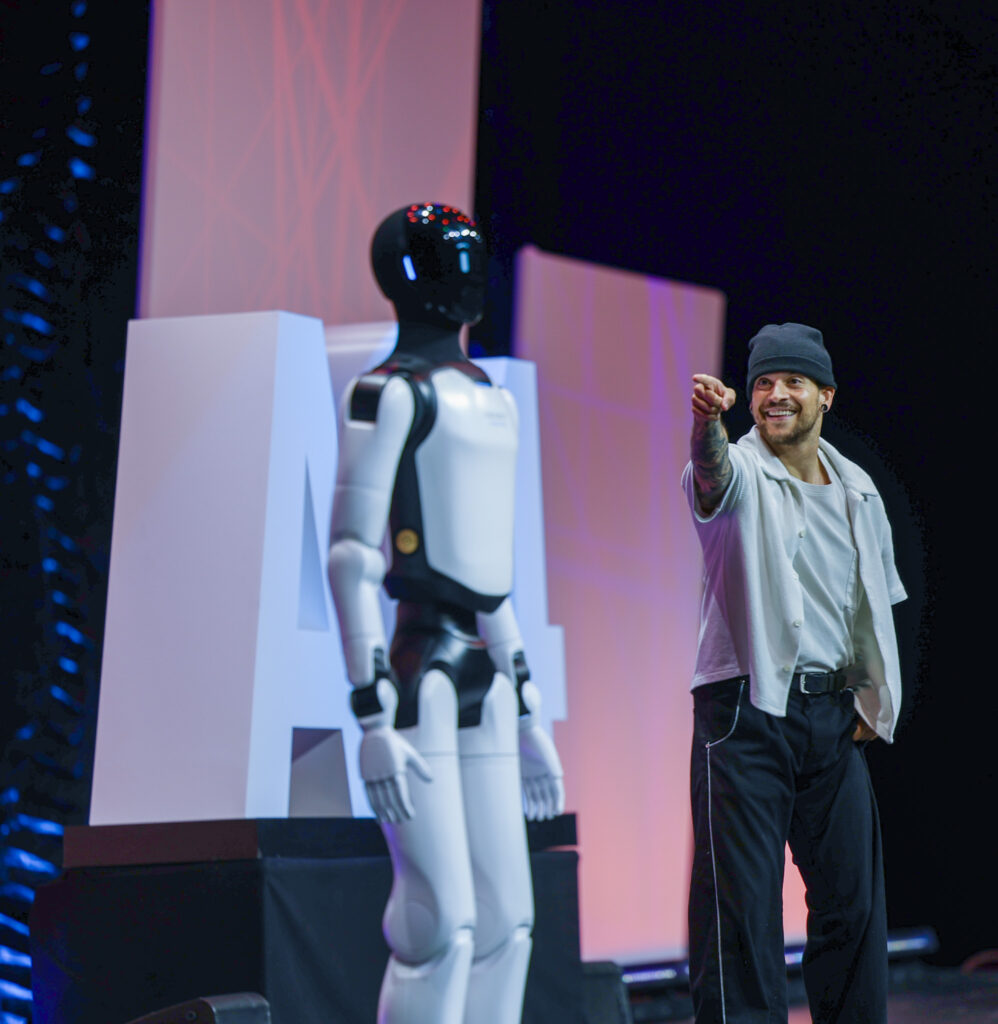
Honestly, I don’t know if I want AI to do my work for me. I also don’t know if I like working with AI agents rather than people. Customer service is being done more by AI. I find myself saying to the phone: “I just want to talk to a person” way too often. Maybe people will be willing to pay more money for the experience of talking to a human being.
The intersection between learning and business is also becoming increasingly complicated. The purpose of education is to prepare the rising generation to take their place in society. We are teaching them the skills that they need to be successful. Universities try to produce future doctors, lawyers, businessmen, teachers, graphic designers, scientists, etc., etc., to walk in the experts’ footsteps. But AI has changed that millennial standard because the experts and employers are trying to figure out what new skills the rising generation will need to fulfill their place in this new foundational world structure.
Machines are not creative, nor are they real-world smart. Focusing on creativity and real-world problem-solving skills will help prepare children for new jobs. The Industrial Revolution gave children the chance to be educated more widely and broadly. With machines doing the heavy labor, even the poorest families could send their children to school. Governments started mandatory public education to educate the rising generation for their new jobs that required more brainpower.
Hopefully, the rise of artificial intelligence will raise the human intelligence of all people, rather than cause an overreliance on AI to read, write, and think for us.
The Threat of Technological Colonialism
The biggest concern I have about AI is the global battle over technological dominance. The Global South is being left out of the race because of the cost of AI and its necessary infrastructure. In many Third World countries, simple Internet tools are hard enough to use because of the lack of technological bandwidth and basic power grids. How can they compete against the ever-growing resources and infrastructures of the Global North? Also, the most sophisticated AI models are all in the United States and are trained on English and other major language data. Open-source models allow others to create specialized models that can be smaller and faster.
For other countries to use AI technology in their own language, their LLMs need to be trained with sufficient data in their own language. The problem is there is a paucity of data in the languages of many of the countries of the world. An AI model is only as good as the information it is given. This means that these other models will not be as useful to the speakers of less common languages. China is pushing their open-source models to African countries to help them enter the AI race. There should be other financially viable AI solutions for Third World countries to choose from.
Final Thoughts
I don’t know where AI will take us. I concur with the experts – AI can be either a destroyer or a deliverer of great knowledge – or maybe both. This will be determined by how well we use it and share it. Technologists place their discussion of AI around how well AI is playing in its sandbox. But how well is humanity playing in its own sandbox called Earth? Are we playing well with our neighbors? Is our only goal to make money and experience world dominance? I hope not. We need to center our AI goals on human flourishing for all mankind. AI can be a deliverer of light and knowledge to all humanity.
We need to share in the sandbox. If not, the sandbox can be a dirty place with kids throwing sand in each other’s faces to grab for tools to make their own sandcastles. I worry that if AI’s sandcastle falls over, then the entire sandbox will be in disarray. Holding on to our humanity, our creativity, our critical thinking skills, and our faith will be the best way to ensure that when we look back on this Age of AI, we did survive.
———
Dr. Marianna Richardson is the Director of Communications for the G20 Interfaith Forum (IF20) and head of its AI Working Group, where she works at the intersection of faith and global policy. She has chaired sessions on technology and ethics at G20 Interfaith Forum gatherings, including the Technology and Ethics session at the 2023 IF20 Summit in Pune, India, and she writes regularly on AI governance, religious freedom, and human flourishing for IF20’s Viewpoints blog – including recent reporting from UN Open Source Week and the first UN Global AI Dialogue in Geneva. She is also an adjunct professor of management communication at the BYU Marriott School of Business, editor-in-chief of the Marriott Student Review, and a member of the International Advisory Council for the International Center for Law and Religious Studies. She holds a master’s degree from Johns Hopkins University and a doctorate from Seattle Pacific University.