
By Marianna Richardson, Director of Communications for the G20 Interfaith Forum and head of its AI working group
———
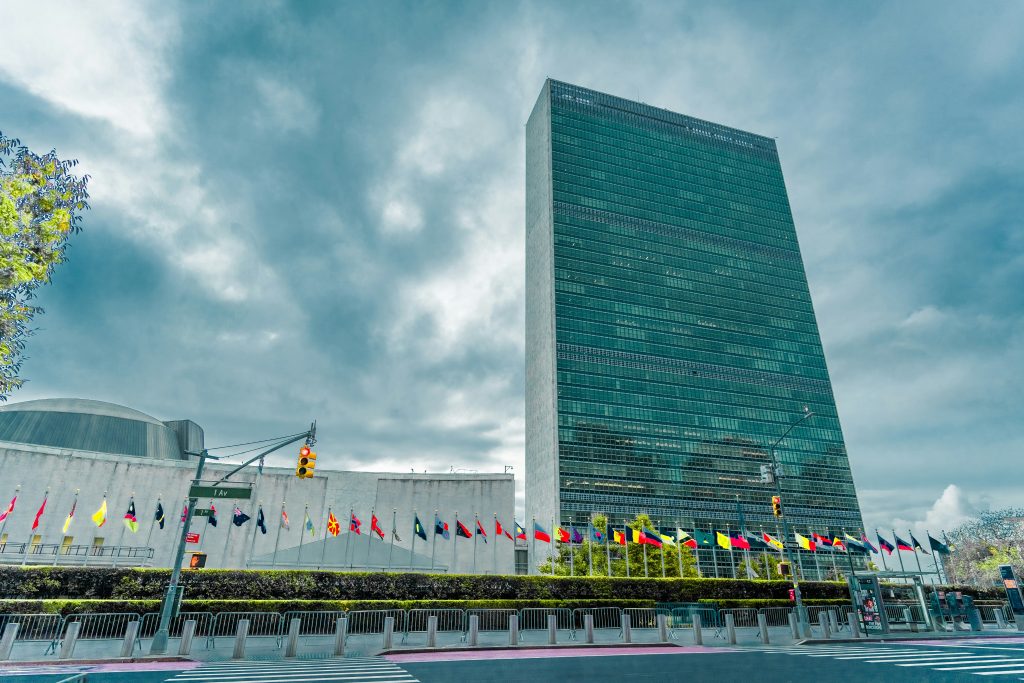
On 23 June 2026, during the Open Source × AI day of UN Open Source Week 2026 at United Nations Headquarters in New York — co-hosted by the UN Office for Digital and Emerging Technologies (ODET) and the Office of Information and Communications Technology (OICT) — several sessions turned from the case for open AI to the practice of building it inside government. This summary covers remarks by Thomas Jarzombek, Parliamentary State Secretary at Germany’s Federal Ministry for Digital Transformation and Government Modernisation; a chief technology officer’s argument for openness across the entire technology stack; and a high-level panel, “Open Source for Digital Development,” moderated by Amandeep Singh Gill and featuring Amal El Fallah Seghrouchni, Morocco’s Minister Delegate for Digital Transition and Administrative Reform, Audrey Marks, Jamaica’s Minister of Efficiency, Innovation and Digital Transformation, and Salima Bah, Sierra Leone’s Minister of Communications, Technology and Innovation.
Germany: Public Money, Public Code
Thomas Jarzombek described a German digital-transformation strategy rooted in open-source principles and aimed squarely at national independence, transparency, and citizen trust. The guiding formula, he said, is “public money, public code”: systems paid for with public funds should run on code the public can see and reuse, freeing government from lock-in to any single vendor. He pointed to digital identity wallets, citizen-service AI platforms, and large-scale infrastructure tools as examples, and stressed that Germany’s public technology agency operates independently of political control — a posture he framed as “freedom with values” that makes international cooperation easier.
Among the concrete projects, he highlighted SPARK, a platform that assembles the expert reports and documentation required to approve large structures such as railways and bridges, checking them for completeness and consistency, cutting roughly six months from the process, and making it easier for citizens to file objections. An agentic-AI hub, offered as open source, helps startups, modernizes legacy software, and streamlines public-sector workflows — down to summarizing social-security claims. Germany’s collaboration suite, openDesk, was presented not as a mandate but as a way to give institutions genuine choice. Jarzombek closed by introducing SOPHIE, a hybrid open-source AI model built by the government and offered to other nations as an open invitation to collaborate, arguing that open-source AI and open weights are now essential to sovereignty, flexibility, and trust.
Openness Across the Whole Stack
A related session widened the lens from open models to the entire technology stack. Its central warning was of a future in which every country depends on a handful of private companies — effectively outsourcing national skills, culture, and sovereignty. Because AI rests on data, infrastructure, and people, the speaker argued, genuine sovereignty requires openness across all of it, not open-source models alone. Institutions need to be able to replace individual components, keep data under local governance, and maintain continuity even when a private provider changes its terms of service or withdraws a product. Open platforms, shared standards, and interoperable interfaces — including open data formats — create the conditions for durable national AI strategies rather than dependence on a single supplier.
Trustworthy AI, the session concluded, must also be locally relevant and privacy-respecting, built with strong identity and access controls, continuous moderation, and disciplined deployment, and shaped with meaningful input from the communities it serves. Even private AI can be responsible and secure, the speaker argued, when it is built on open foundations — and if the world gets this right, AI can remain under human control, reflect diverse cultural values, and serve all of humanity rather than a few dominant actors.
Open Source for Digital Development
The theme took concrete form in a ministerial panel featuring three leaders from Morocco, Jamaica, and Sierra Leone, who addressed how open-source AI can support national transformation while ensuring that developing countries scale up rather than fall further behind. Morocco’s Amal El Fallah Seghrouchni described early investments in data infrastructure, local algorithm development, and the shift from paper to digital public services, arguing that open source is essential for building public confidence and long-term sustainability and for overcoming the distrust that can accompany AI in government. She pointed to national institutes and data centers positioning Morocco as a hub whose solutions can scale across the African region.
Jamaica’s Audrey Marks focused on changing how open source is perceived — from a cost-saving measure to a strategic instrument of sovereignty and security. Jamaica, she said, is building its own AI foundations, has launched an open-data initiative and a national data-exchange platform that lets government departments break silos and share information, and is training citizens through its GAINS program so that Jamaicans become active builders in the AI economy rather than mere consumers. She tied these efforts to practical gains such as a national identification system that, linked through the data exchange, makes everyday tasks like opening a bank account far simpler.
Sierra Leone’s Salima Bah made the case for an “open-source first” policy to avoid vendor lock-in, control costs, and build on shared solutions instead of every country duplicating the same work — warning that endless proprietary subscriptions can become a trap with no way out. Cautioning against systems that are “done to us, not done with us,” she emphasized partnerships that empower rather than dictate, Sierra Leone’s commitment to the Digital Public Goods movement, and the need for each nation to assess its AI readiness and define its comparative advantage so it can contribute strategically to global progress. Across the panel, the ministers agreed that open source strengthens local talent, accelerates innovation, and supports AI that is trustworthy, sustainable, and aligned with national priorities — with the private sector and patient investment playing a critical role in getting there.
———
Marianna Richardson is Director of Communications for the G20 Interfaith Forum, where she leads the Forum’s AI working group and its ongoing exploration of how artificial intelligence intersects with faith, ethics, and public policy. She is also an adjunct professor of management communication at the BYU Marriott School of Business, where she serves as editor-in-chief of the Marriott Student Review and faculty advisor for the Measuring Success Right podcast, and she sits on the International Advisory Council for the International Center for Law and Religious Studies. She attended UN Open Source Week 2026 on behalf of the G20 Interfaith Forum to follow developments in open-source and sovereign AI that bear on the Forum’s work at the intersection of faith and policy.