

By JoAnne Wadsworth, Communications Consultant for the G20 Interfaith Forum
———
This piece draws on a recent episode of the G20 Interfaith Forum Podcast, in which hosts Marianna Richardson and Stuart Bird sat down with Rachel Miner — founder and CEO of Bellwether International — to discuss the economics of genocide, the role of religious freedom in prevention, and what the interfaith movement needs to understand about artificial intelligence. Watch the full podcast episode here.
When you ask Rachel Miner how often genocide happens, she will tell you, with the calm precision of an economist, that the answer is roughly every two and a half years. She will also tell you that genocide is predictable — the only form of mass violence that is.
That second answer is the more important one. It is also the one most people have never heard.
Miner is the founder and CEO of Bellwether International, a non-profit dedicated to disrupting the cycle of genocide and building what she calls “genocide-resistant societies.” In a recent conversation on the G20 Interfaith Forum Podcast with hosts Marianna Richardson and Stuart Bird, she laid out a framework for prevention that is, by turns, sobering and surprisingly hopeful.
Trained as an economist at Brigham Young University before completing master’s degrees at the London School of Economics and Columbia University, Miner came to human rights work by way of a charity in London responding to the Yazidi genocide. An advisor asked her a question that, she said, set her on a different path: what is the relationship between religious freedom and what is happening to the Yazidis? She has been answering it ever since.
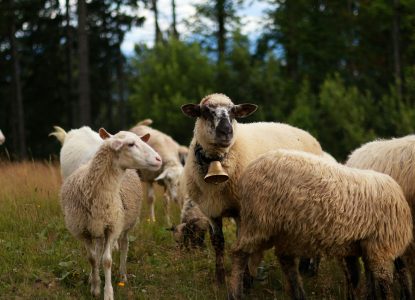
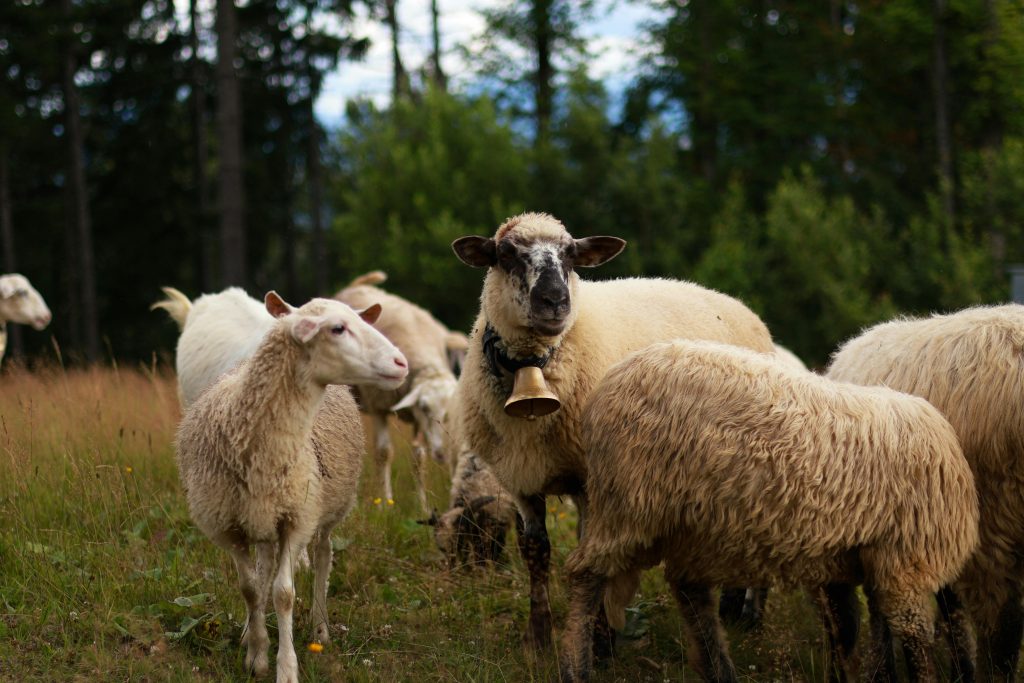
The name Bellwether carries two meanings, both deliberate. In finance, a bellwether is the stock or trend that signals where a market is going — watch it, and you can read the direction. In older usage, the bellwether is the sheep that wears the bell, leading the flock in the absence of the shepherd. Both meanings, Miner says, matter for human rights. The question Bellwether is built around is whether each of us, religious or not, can become a kind of bellwether for human dignity — reading the trends early enough to disrupt them.
The disruption mindset crystallized for her during a class at LSE, when a former head of the Bank of England visited to discuss crisis management. A student asked whether it was better to do a million good deeds or prevent one bad outcome. The answer was unequivocal: prevention. “That moment shook me to my core,” Miner said. It became, in her words, a North Star.
Genocide Is Predictable
Most of what people assume about genocide turns out to be wrong, Miner argues — starting with the assumption that we do not know enough to predict it.
We do.
“Genocide is the only form of mass violence that’s completely predictable. I cannot predict political coups. I cannot predict civil war. I cannot predict world war. But I can tell you exactly when genocides are going to happen.”
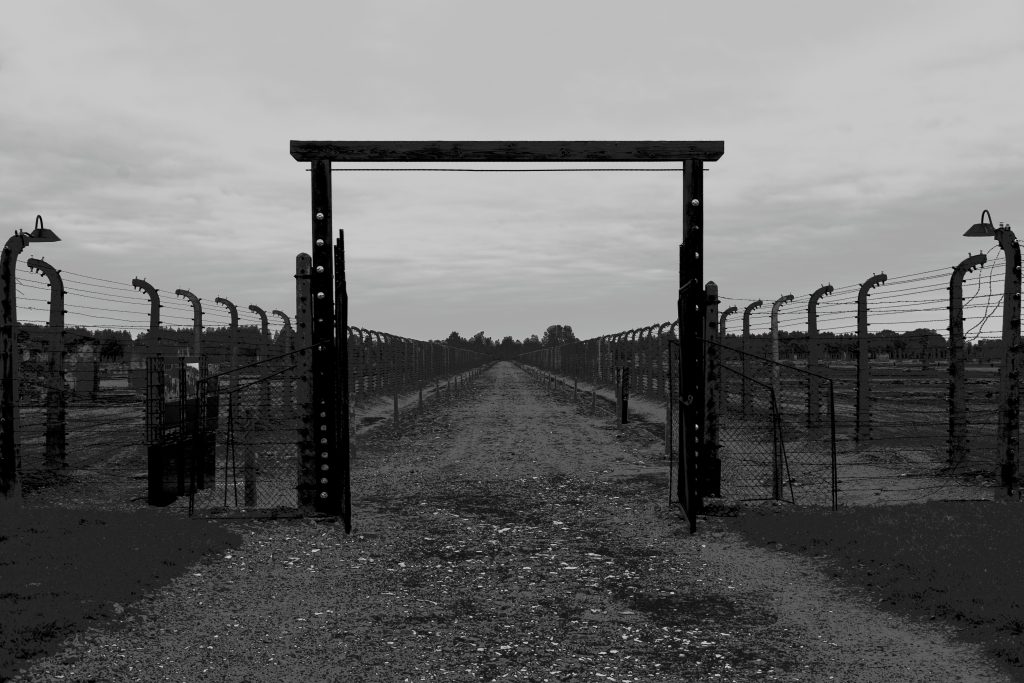
The reason is that genocide follows a recipe — a clear progression from the degradation of human rights to identity-based scapegoating, isolation, and execution. The specifics vary in every context; the underlying pattern does not. And every modern genocide has been preceded by a period of prolonged economic suffering. “Strong economies don’t have genocide,” Miner notes. Pre-Holocaust Germany had endured years of recession before Hitler selected the Jews as the economic scapegoat. The same pattern repeats — in Rwanda, Cambodia, Bosnia, Sudan, Myanmar, and China.
The geography is also narrower than most people imagine. Genocide is not happening everywhere. It is happening in roughly fifteen countries, often with deep historical precedent: a country that has experienced genocide is three times more likely to experience it again. The genocide trap is, in part, an economic poverty trap, and it takes economies an average of fifteen years to recover from a genocide — trillions of dollars lost, on top of the irreplaceable loss of human life.
This, Miner argues, is why an economist’s lens matters. “No one has really thought about economics as the primary language of human rights,” she said. The legal frameworks — the Genocide Convention, the tribunals, the prosecutions — matter, and they work. But the perpetrators of genocide believe themselves to be above the law. What they think they care about is incentive: land, power, resources. The economic data tells a different story. Genocide has never been economically successful for the people who commit it. Not once.
Religious Freedom as Prevention
If genocide is predictable, prevention is possible. And one of the most underused levers, in Miner’s framework, is religious freedom.
Religious minorities have borne a disproportionate share of genocide in modern history. In the past century, Jews and Muslims have been the most frequent targets; extend the window 150 years and Armenian Christians enter the picture. The pattern of faith-based scapegoating is consistent enough that Miner treats religious freedom not as a niche concern but as a structural component of genocide prevention.
That framing also rewrites who counts as a prevention actor. Religious leaders, in Miner’s view, are not only spiritual guides; they are the people best positioned to identify identity-based hatred within their own communities and intervene before it escalates. Interfaith networks, in turn, model something the broader culture struggles to demonstrate — the idea that one’s rights are best protected by people who are not like oneself.
“When the Sikh is protecting the Muslim, and the Muslim is protecting the Christian, and the Christian is protecting the Jew — that is actually how we’re going to cut through the overwhelm.”
This is also, Miner pointed out, why religious freedom is not only for the religious. At the 2024 IF20 Forum in Brasilia, she argued that freedom of religion or belief is meant to protect the secular world as much as the religious one — to safeguard identity in all its forms, whether that is faith in God, faith in humanity, faith in the future, or faith in merit. “If you’re going to leave no one behind,” she said, “you need to know who’s behind you.”
What AI Will and Will Not Tell You
About a third of the way into the conversation, the discussion pivoted to artificial intelligence, and Miner — who studied AI at Columbia and codes in three languages — offered one of the more pointed cautions of the hour.
The biases people are now noticing in large language models, she said, are not surprising if you look at how the systems are trained. AI models learn from publicly available data, which in practice means the internet, social media, news, English-language sources, and the academic material that sits outside paywalls. That corpus is overwhelmingly a product of the Global North — which, Miner observes, is also the least religiously diverse and least religiously inclusive region of the world. Bake those omissions into a model and the output will reflect them.
She did not mince words about which tools she recommends. “I cannot say it loud enough,” she said. “Do not use ChatGPT.” Her concern is data weaponization — contracts with governments that turn user information into a national-security or political asset. She uses Perplexity, which she prefers because every answer comes with citations.
But Miner’s broader point is not anti-AI. Bellwether itself uses machine-learning models to forecast where genocide is most likely to occur next. AI is a tool, and a powerful one. The moment for interfaith communities to engage it — to push back on training-set biases, to demand religiously inclusive design — is right now, while the field is still volatile.
“The best time for religious leaders to be involved with AI was yesterday. The next best time is right now.”
From Talking to Doing
Miner closed the conversation with a challenge to the people most likely to listen to a G20 Interfaith Forum podcast in the first place: the people who go to interfaith conferences.
These gatherings, she said, are not quite the diverse, accessible spaces they sometimes present themselves as. They are privileged spaces, populated by people with academic credentials, financial means, or religious authority. That privilege is not disqualifying — but it is a responsibility. The risk in any convening of like-minded people is that they spend a great deal of money talking to themselves and not enough delivering impact.
Her test for a useful conference is simple. Does it multiply efforts, and does it deliver impact? Multiplication, she said, requires either new donors or new partners. Impact requires moving past “nice to see you” and into the harder conversations — about overlapping work, duplicated effort, and what a partnership could actually produce. She credited IF20 specifically with treating its annual gathering as a working forum rather than a self-congratulatory one, and noted significant improvements from Brasilia to Cape Town and now toward Salt Lake City.
If a single thread ties together Miner’s reflections on economics, religion, AI, and convening, it is the refusal to be paralyzed by scale. Genocide is a global crisis. AI bias is a global crisis. Trust, she pointed out, is at historic lows in the United States. The temptation, in the face of any one of these, is to retreat. The bellwether’s job, she suggests, is to refuse that retreat and to start where one actually stands — in one’s own sphere of influence, with the people in front of you.
The data, she insists, will tell you which trends to watch. The work is what to do once you have seen them.
———
JoAnne Wadsworth is a Communications Consultant for the G20 Interfaith Forum Association and Editor of the Viewpoints Blog, IF20’s platform for commentary at the intersection of faith and global policy. She has covered the work of the Forum across multiple G20 cycles, producing summaries, articles, and editorial content that bring the voices of interfaith leaders and scholars to a broader audience. Her writing engages with topics spanning environmental governance, religious freedom, anti-racism, and the role of faith in multilateral policy processes. She is based in the United States.