
By JoAnne Wadsworth, Communications Consultant for the G20 Interfaith Forum Association and Editor of the Viewpoints Blog
———
This blog is based on a recent episode of the G20 Interfaith Forum Podcast, in which hosts Stuart Bird and Marianna Richardson spoke at length with Dr. Iyad Abumoghli about the Faith for Earth Coalition, the Al-Mizan Covenant for the Earth, and the moral and spiritual dimensions of the global climate crisis. You can listen to the full episode here.
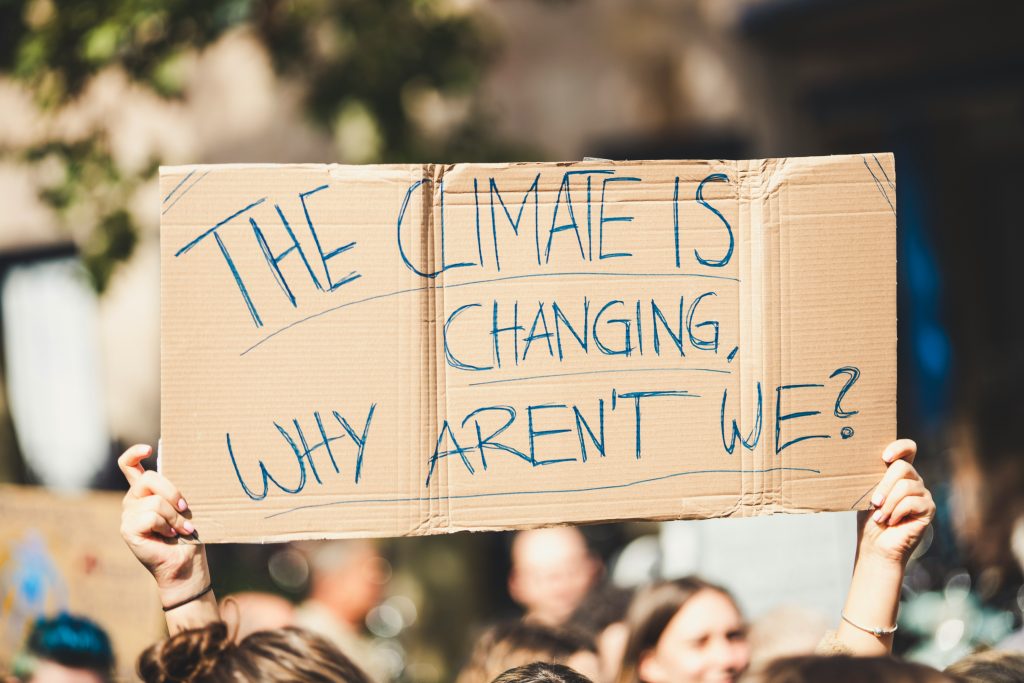
When Iyad Abumoghli joined the United Nations Environment Programme in 1997, climate change was already beginning to register on the global agenda. But it took years of field experience—working alongside governments across the Arab States region, witnessing the cascading effects of drought, water scarcity, and failing food systems—before he arrived at a conviction that would come to define his work: that the environmental crisis is not, at its root, a failure of policy or technology. It is a failure of values.
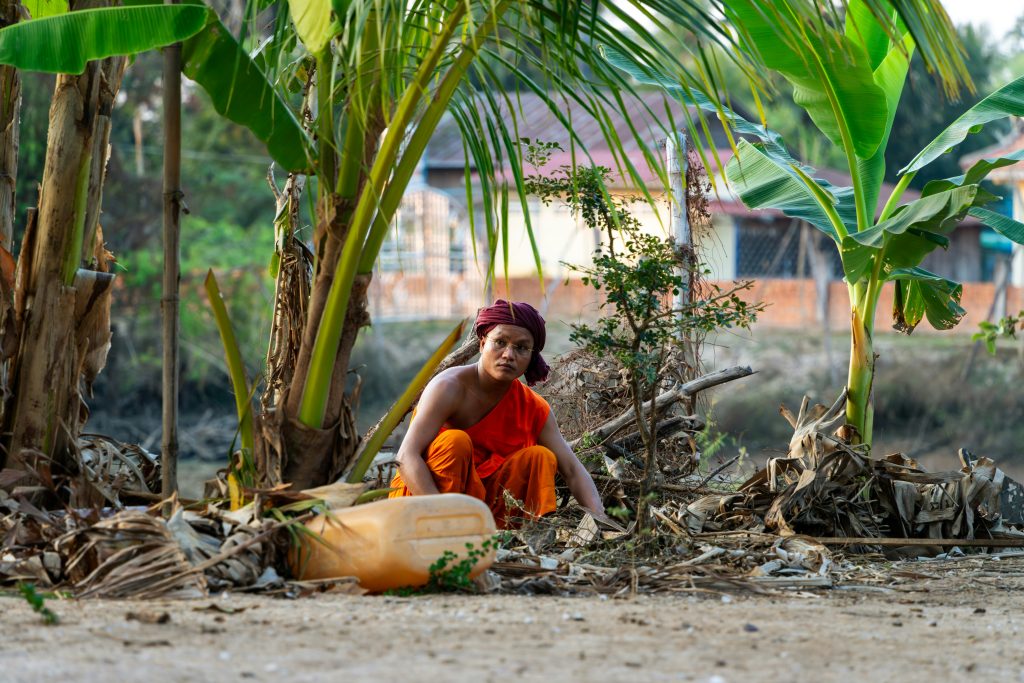
If water resources decline, agriculture fails. If agriculture fails, livelihoods and food systems collapse. And as ecosystems degrade, the resilience of entire societies is weakened. The interconnectedness of these consequences is not abstract—it is the daily reality for communities across the Middle East, Africa, and far beyond.
“Climate change is not one crisis among many. It is the force that amplifies every other crisis—the multiplier that turns water scarcity into failed harvests, failed harvests into collapsed livelihoods, and collapsed livelihoods into the unraveling of entire societies.”
That realization—that the crisis is “driven by greed, sustained by apathy, and normalized by indifference”—marked a turning point in Abumoghli’s career. It led him to focus on the ethical and spiritual dimensions of environmental collapse, and ultimately to found the Faith for Earth Coalition at UNEP, which he directed until his retirement in 2025.
Bringing Faith to the Table
The Faith for Earth Coalition was built on a straightforward premise: faith organizations are not peripheral actors in global environmental governance—they are one of the most significant forces on earth, and they have been largely absent from the room where decisions are made. When Abumoghli founded the Coalition, not a single faith-based organization held accreditation with UNEP. By the time he stepped down, more than 100 had been accredited, meaning they now hold a formal seat at the table of environmental decision-making.
The practical achievements of that shift have been significant. High-level interfaith summits were convened alongside major UN climate conferences—events that had simply never happened before. Pope Francis’s invitation to global faith leaders ahead of COP26 produced declarations that were not merely calls for others to act, but commitments by faith leaders to reform their own institutions. Faith communities contributed to fossil fuel divestment in the billions of dollars, advanced climate literacy within congregations worldwide, and began greening their own assets and places of worship.
This last point matters more than it might appear. Faith organizations, as Abumoghli is quick to note, represent the fourth largest economic power on earth. The principle he returns to repeatedly is simple: practice what you preach. “If you have an organization that is contributing to environmental degradation,” he says, “then start by thyself.”
At the heart of this work is also a reframing of the moral stakes. The Coalition documented the environmental teachings of virtually every major world religion—producing resources that connect climate action, biodiversity, and pollution to the core values of each tradition. These guides have become reference points for faith communities navigating their role in the environmental movement.
“Sustainability is not only a scientific necessity. It is a moral obligation.”
Al-Mizan and the Crisis of Imbalance
In recent years, Abumoghli’s attention has turned increasingly to the largely untapped environmental wisdom within the Quranic tradition. Roughly 25% of the global population is Muslim, and the Quran, he argues, is rich with environmental guidance that has gone underutilized. To mobilize that tradition, he convened scholars from across the world and produced Al-Mizan: A Covenant for the Earth, a framework built around the concept of balance—“balance, justice, harmony, and recognition of the interconnectedness of all forms of life.”
In Abumoghli’s framing, the so-called “triple planetary crisis”—climate change, biodiversity loss, and pollution—is not three separate problems but one: a crisis of imbalance in how humanity relates to the earth. Faith communities, he argues, are uniquely positioned to restore that balance. They shape values. They influence behavior. They guide communities toward responsibility and stewardship across generations. And through frameworks like Islamic finance, which emphasizes socially responsible investment and the prohibition of harmful speculation, they can even help reshape the economic systems that are driving the crisis.
“Finance must return to its original purpose—to serve life, not to exploit it.”
On individual responsibility, Abumoghli is equally direct. He cites the Prophet Muhammad’s instruction to conserve water “even if you were at a running river”—a statement made 1,400 years ago that speaks to a foundational understanding: that resources are not ours alone. Every major faith tradition contains guidance that, if followed, would transform individual environmental behavior. And the challenge of translating those teachings into practice—especially among younger generations who may not feel the effects of the crisis personally—is one of the defining tasks of our time.
It is worth pausing on what Abumoghli means when he calls the environmental crisis “a moral and spiritual test.” He is not speaking abstractly. He means that solving it will require transformation—not just technological or regulatory, but internal. It is a test of compassion: whether we care for those already suffering and for generations yet unborn. It is a test of unity: whether we can transcend divisions and act as one human family. And it is a test of courage: whether we are willing to challenge entrenched systems and choose long-term well-being over short-term gain.
“The state of the earth is a mirror of the state of our conscience. Solving the crisis demands not just better policies or technologies, but transformation—of values, of priorities, and ultimately of will.”
The IF20’s Role
For Abumoghli, the work of the G20 Interfaith Forum is essential to meeting that test. He has been a member of the IF20 Advisory Council since 2021, and he sees the Forum as one of the few venues where the values of faith communities can be genuinely integrated into the highest levels of global economic governance.
“Policy without values lacks direction. Values without policy lack impact.”
The two must move together—and the IF20, at the intersection of faith and the world’s most powerful economic forum, is one of the places where that integration can happen. As the G20 process continues and climate remains a central agenda item, the question of whether faith perspectives will have a genuine seat at the table—not as observers, but as contributors to the ethical framework within which policy is made—is more urgent than ever. Iyad Abumoghli has spent decades building the infrastructure to make that possible. The next step, as he sees it, is ensuring that faith is not merely consulted, but heard.
———
JoAnne Wadsworth is a Communications Consultant for the G20 Interfaith Forum Association and Editor of the Viewpoints Blog, IF20’s platform for commentary at the intersection of faith and global policy. She has covered the work of the Forum across multiple G20 cycles, producing summaries, articles, and editorial content that bring the voices of interfaith leaders and scholars to a broader audience. Her writing engages with topics spanning environmental governance, religious freedom, anti-racism, and the role of faith in multilateral policy processes. She is based in the United States.