

By Katherine Marshall, Vice President of the G20 Interfaith Forum
———
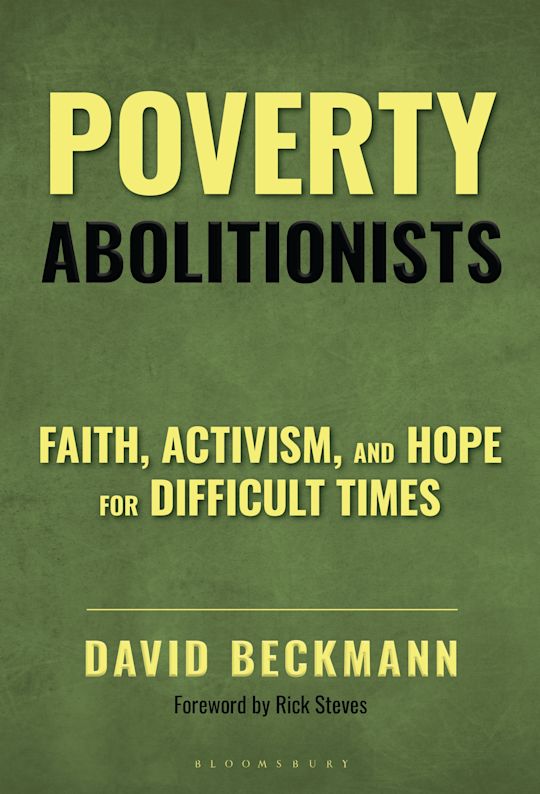
A reflection by Katherine Marshall on Poverty Abolitionists: Faith, Activism, and Hope for Difficult Times, the new book by David Beckmann — pastor, economist, and, for 29 years, President of Bread for the World. Beckmann will speak at a plenary session of the 2026 G20 Interfaith Forum in Salt Lake City, Utah, October 15–17. Ending hunger and poverty remains among IF20’s priority recommendations, and Beckmann’s book offers both the case and the tools for acting on it.
David Beckmann has played many leadership roles over his life: pastor, economist, NGO leader, activist, and now author. But throughout, his deep commitment to serve those who suffer the miseries and indignities of extreme poverty has never wavered. He goaded the World Bank’s leadership to open minds and hearts to doing more for the disadvantaged for many years, then for 29 years, as President of Bread for the World, he worked incessantly, across partisan, religious, and other lines, to press for more and more effective action to end hunger. Now, with his new book, he is urging action at every level, from very local to global. David is a true believer in a modern reality: that the problems of poverty and hunger can be solved with the knowledge, experience, and resources that we clearly have, and that with that possibility comes a responsibility to act, now and effectively.
Poverty Abolitionists is a carefully crafted guide to action on an issue that the G20 Interfaith Forum has put as a priority recommendation: ending hunger. It is structured around five insights and ten strategies. And David Beckmann links both insights and strategies for action to the core religious beliefs that he holds, above all in the love of God.
Five Insights
Insight 1 sets the tone of hope, addressing the book’s subtitle that highlights our difficult times. “We CAN end poverty” is his theme, and it echoes and resonates, backed up by solid evidence of past progress. He introduces and weaves the theme of abolition, linking today’s challenges to courageous and religiously motivated leaders who worked to end slavery and to address other knotty social problems. He explores different reasons for his focus on poverty, starting with the real prospect for progress, its links to so many other issues including war, social dissension, and damage to the environment. But, above all, poverty is a foundational religious issue.
Jesus taught “that God has a special concern for people who are hungry or thirsty, immig
rants, people who can’t afford proper clothes, and prisoners.”
For Insight 2, David’s analysis draws on experience, his own and others he has known, to bolster the core argument of priority, real needs, and hope. Stories make the needs and positive visions, courage and despair, come alive.
Three other insights evoke positive and hurtful themes: the real pain of poverty, in our so well-endowed America and around the world, the record of remarkable progress made in the United States, which contrasts with the difficulty of the moment, which he characterizes as a huge setback. The United States has been and can be a leader, showing the way. We need, he urges repeatedly, to get back on track. And he outlines the policy directions that would restore progress against poverty.
Ten Strategies
The next section of the book outlines ten strategies to address our perennial challenge: to translate good intentions into will, action, and results. Strategy 1 is the core of David’s arguments about political responsibility: “Legislative advocacy works,” and Strategy 2 follows, with his conviction that elections shape the future (VOTE!). Democracy, justice, charity, and business come next. Strategy 6 addresses the fraught issues around Internet and AI, with tools and approaches he sees as ways to defang the negative and benefit the positive. Strategy 7 is a plea to reach across divides, especially those that roil our politics, then (8) to draw on the resources of “love and justice churches.” He speaks (Strategy 9) to the need for what he calls “Educated faith.”
The final of the 10 strategies David proposes is to anchor our faith in confidence in a forgiving, loving God. “God’s forgiving love for the world is foundational to Christian faith and to my commitment to economic justice.” The book ends with the reminder that we are all connected to the rest of humanity and the planet. The most robust and satisfying spirituality, he argues, focuses on working for a better world.
Poverty Abolitionists is a tightly argued book (157 pages), carefully structured, to serve both to inform and inspire and to offer clear paths forward. It makes a powerful case for working to end, to abolish poverty, and it offers ways to think about priorities and practical tools for action. It comes at a critical time in American and world history. Onward and upward!
———
Katherine Marshall is Vice President of the G20 Interfaith Forum, where she has helped shape the Forum’s agenda, policy briefs, and recommendations since 2017. She is a senior fellow at Georgetown University’s Berkley Center for Religion, Peace, and World Affairs, leading the Center’s work on religion and global development, and a professor of the practice of development, conflict, and religion in the Walsh School of Foreign Service. She also helped create and serves as executive director of the World Faiths Development Dialogue, an NGO that builds bridges between religious communities and development institutions. Her five decades of work on poverty, hunger, and development include a career at the World Bank (1971–2006), where she led its faith and ethics initiative, and an appointment to the U.S. Agency for International Development’s Advisory Committee on Voluntary Foreign Aid. She writes regularly on the intersection of faith and development, including through her blog, Faith in Action.