
By JoAnne Wadsworth, Communications Consultant for the G20 Interfaith Forum
———
From October 15–17, 2026, the G20 Interfaith Forum will hold its annual Forum in Salt Lake City, Utah, under the theme “Resilient Hope, Shared Future.” The United States holds the G20 presidency this year, with the Leaders’ Summit scheduled for December 14–15 in Miami. Salt Lake City is where IF20 will consolidate a year of research, consultation, and convening aimed squarely at that agenda.
The premise underlying the yearly forum is straightforward: Faith communities are not peripheral to the world’s great challenges; they are embedded in them. With 84 percent of the world’s population identifying as religious, faith institutions constitute humanity’s most expansive civil society infrastructure: running schools, hospitals, and aid networks in places where governments and international bodies often cannot reach. IF20 exists to ensure that this on-the-ground presence, and the moral voice religious traditions have always offered in moments of reckoning, has a seat at the table where global policy is made.
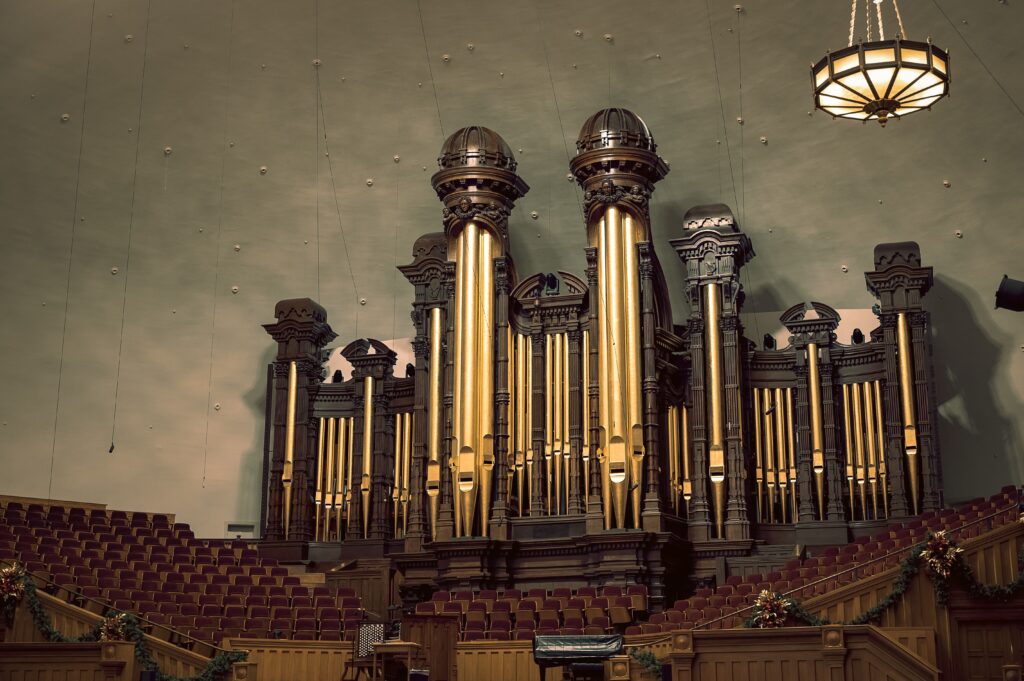
Locations
The program will be hosted across three of Salt Lake City’s landmark spaces. Thursday will open at the Historic Tabernacle at Temple Square with a session titled Disagree Better, featuring Gov. Spencer Cox, Governor David Beasley, and Martin Luther King III–a fitting way to begin a gathering built on the foundation of real and productive dialogue. That evening, welcome addresses from religious leaders and a concert by the Tabernacle Choir at Temple Square will open the Forum proper.
Friday and Saturday will move to the University of Utah, where the substantive work will happen. The Forum then will close Saturday afternoon at the Cathedral of the Madeleine.
Five Plenaries, Four Policy Papers
The plenary structure grew out of the USA G20 Presidency’s three stated priorities for the year. In response, four policy papers were developed for the Washington Policy Forum held May 26 at Georgetown University, circulated for consultation and comment, then revised. Four of the five plenaries in Salt Lake City will continue on the work of those papers:
- Unleashing Human Potential for the Common Good. Friday morning will open on the tension at the heart of the 2026 economic agenda: abundant riches and stunning progress alongside stubborn poverty. The session will ask how the G20 and faith communities can support entrepreneurship, address unsustainable debt burdens, and build social protection that works for all, holding to IF20’s continuing concern for those left behind.
- Deadline 2030: Extending G20 Horizons. Better health and near-universal literacy count among the achievements of the past century, but the consensus underpinning global goals is fragile. Drawing on twelve years of IF20 experience, this plenary will look past the failing SDG deadline to ask what lies on the more distant horizon.
- Technology for Good: Modern Miracles vs Existential Threats? Saturday morning will bring faith perspectives on AI systems from a range of traditions—not a comprehensive survey, but a representative account of what religious leaders and people of faith are actually asking for as AI governance takes shape.
- Energy Security with Care for Creation. The US presidency has shifted away from climate concerns toward affordable and abundant energy–a shift many faith communities find unwelcome; yet affordable energy is precisely what lifting hundreds of millions out of poverty requires. Is a long-term green agenda compatible with a shorter-term focus on energy abundance? This session will take the question seriously rather than resolving it in advance.
Friday’s evening plenary will work in a different register: Fraser Bullock and Olympic athletes talking about the Olympics and interfaith engagement, Baylor University President Linda Livingstone and BYU President Shane Reese talking about faith and higher education, and a performance by the BYU Indonesia Gamelan Orchestra.
Concurrent Sessions
Three blocks of concurrent sessions focused on Faith in Action, with six simultaneous sessions in each block, will provide further opportunities for depth and real, actionable discussion. Human trafficking and modern slavery, faith engagement with the Pandemic Fund, freedom of religion or belief, gender-based violence, and education’s links to G20 priorities will occupy Friday’s first block. The second will turn to mental health, youth and the governance of AI, cross-cultural religious literacy, nonprofit measurement, poverty and hunger, and a session on treating congenital clubfoot through the Ponseti Method with experts from Shriners Hospitals for Children, CURE Clubfoot India, Rotary International, and others. Saturday’s block will address AI and human dignity, community climate action, disaster response, faith and media, children’s wellbeing, and lessons carried forward from the Brazil and South Africa Forums.
Friday afternoon will also prioritize a service project: a reminder that this is a Forum about action for the most vulnerable, not only about well-phrased words.
The Handover
Saturday will close at the Cathedral of the Madeleine with greetings from local and international Catholic officials, a handover ceremony involving a U.S. official on behalf of the U.S. G20 presidency and Lord Russell Rook, chair of the UK IF20 Organizing Committee, and concluding comments from IF20 President W. Cole Durham and Vice President Katherine Marshall, followed by a farewell concert.
What Comes Next
Over the coming weeks, this blog will run two series in the lead-up to October. The first will take each of the four thematic policy papers in turn, unpacking the arguments and the recommendations they put before the G20. The second will introduce many of the people coming to the forum, sector by sector: faith leaders, government and policy leaders, and academics and NGO practitioners.
Learn more about the forum at https://www.g20interfaith.org/2026-if20-summit-page/
———
JoAnne Wadsworth is a Communications Consultant for the G20 Interfaith Forum Association and Editor of the Viewpoints Blog, IF20’s platform for commentary at the intersection of faith and global policy. She has covered the work of the Forum across multiple G20 cycles, producing summaries, articles, and editorial content that bring the voices of interfaith leaders and scholars to a broader audience. Her writing engages with topics spanning environmental governance, religious freedom, anti-racism, and the role of faith in multilateral policy processes. She is based in the United States.