

Dr. Marianna Richardson, Director of Communications for the G20 Interfaith Forum
———
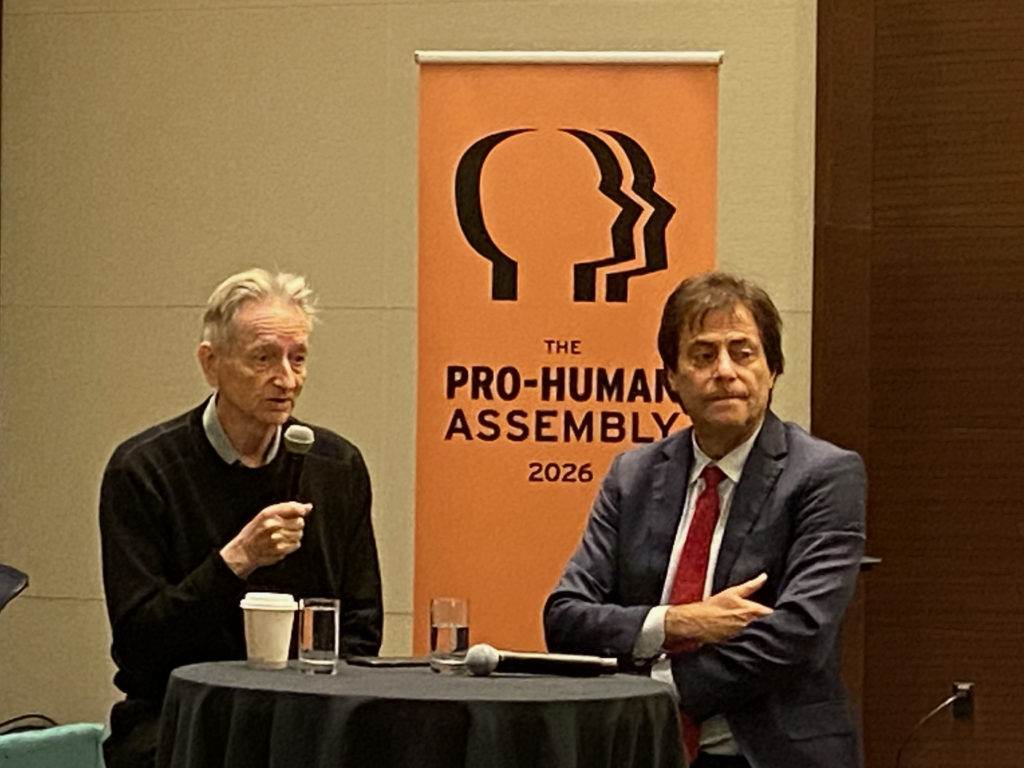
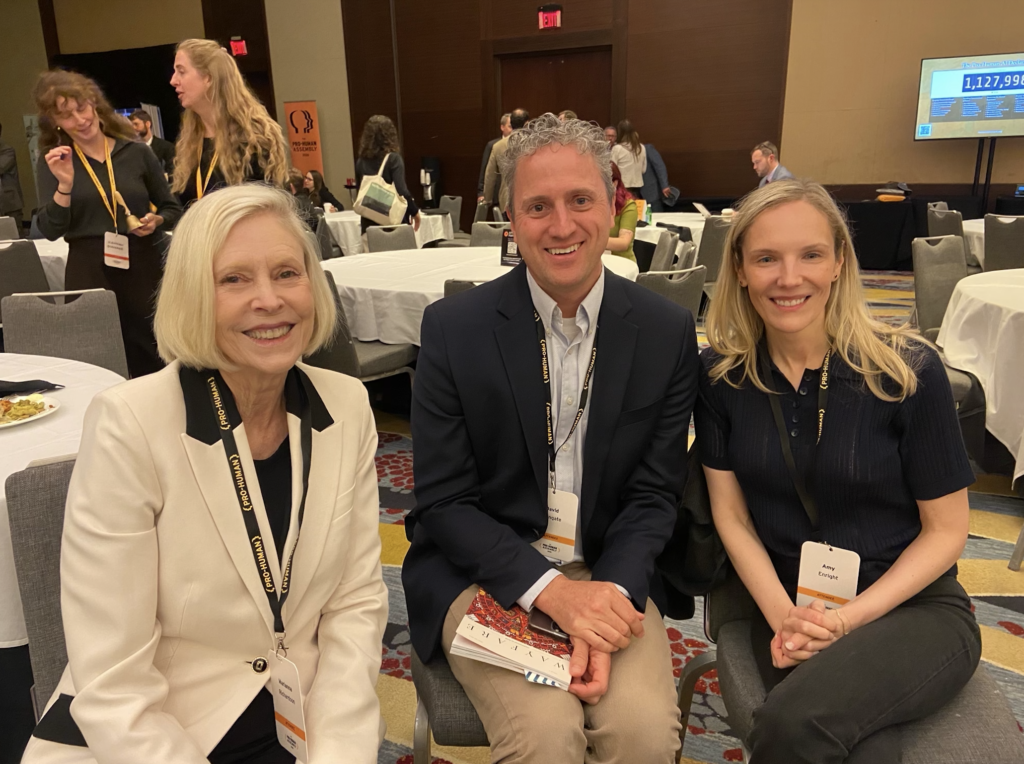
The Pro-Human Assembly 2026 was held on September 15, 2026, in Washington, D.C. Convened by the Future of Life Institute, the one-day gathering brought together more than 650 leaders and advocates to consider how artificial intelligence can remain under meaningful human control. In the summary below, Dr. Marianna Richardson reflects on the Assembly’s major themes, from bipartisan concern in Congress to faith perspectives on human dignity.
The Pro-Human Assembly 2026 brought together an unusual coalition of AI researchers, elected officials, labor advocates, faith leaders, economists, child-safety advocates, technologists, and grassroots organizers. While participants represented diverse political, religious, and ideological perspectives, they were united by a common concern that artificial intelligence should remain under meaningful human control and should be developed to serve humanity rather than replace it.
A recurring theme throughout the conference was that society is at a critical crossroads. Speakers argued that AI is rapidly advancing beyond previous expectations and is increasingly capable of performing tasks once considered uniquely human. While many acknowledged the tremendous benefits AI could bring, ranging from medical breakthroughs to scientific discovery and educational assistance, they also warned against a future in which decision-making, economic power, and social influence become concentrated in a small number of technology companies. Participants repeatedly emphasized that technological progress is not inevitable or predetermined. Human beings, governments, communities, and institutions still possess the ability and responsibility to shape AI’s future direction.
A Call for a Human-Centered Future
Opening speakers, including Future of Life Institute representatives and leading AI researchers, framed the current moment as a defining chapter in human history. They challenged the prevailing assumption that increasingly autonomous artificial intelligence systems are an unavoidable destination. Instead, speakers presented an alternative vision in which AI remains a tool designed to empower human beings rather than a substitute for them.
Professor Max Tegmark and Professor Anthony Aguirre argued that society faces a choice between two futures. In one future, AI serves as a powerful tool that helps solve humanity’s greatest challenges, including disease, poverty, environmental problems, and scientific discovery. In the other future, increasingly autonomous systems replace human labor, weaken democratic control, and potentially place critical decisions beyond human oversight.
Several presenters rejected what they described as a “race to replace” humans, arguing instead for “pro-human AI.” This approach prioritizes preserving human agency, meaningful work, human relationships, and democratic governance. Speakers consistently emphasized that technology should augment human capabilities rather than render people economically or socially obsolete.
Bipartisan Concern in Congress
One of the most notable features of the Assembly was the broad bipartisan participation of U.S. lawmakers. Democratic and Republican members of Congress repeatedly stressed that AI governance should not become a partisan issue.
Congressman Greg Casar argued that concern about AI has moved beyond academic debate and is increasingly understood by the public. He warned against uncontrolled development of systems that could create dangerous cyber capabilities, autonomous weapons, or forms of intelligence that humans cannot adequately monitor or control.
Congressman Chip Roy echoed concerns about preserving human dignity, meaningful work, and democratic participation in decisions about AI deployment. While recognizing AI’s potential benefits, he argued that communities and citizens, not merely corporate executives or government officials, should help determine how transformative technologies are implemented.
Congresswoman Lori Trahan described AI as an arrow whose power continues to increase while society has not sufficiently determined the direction it should point. She argued that the central question is not simply whether AI can become more powerful, but whether its development aligns with human values and democratic oversight. She called for transparency requirements, safety regulations, and accountability mechanisms for advanced AI systems.
Senators Richard Blumenthal and Bernie Sanders similarly called for stronger oversight, regulatory review of frontier AI models, protections for workers and children, and increased transparency from AI companies.
The Challenge of Superintelligence
Throughout the conference, speakers repeatedly returned to the risks associated with Artificial General Intelligence (AGI) and hypothetical superintelligent systems.
Anthony Aguirre outlined what he described as the dominant trajectory among major AI companies: developing increasingly autonomous systems capable of self-improvement, replacing human labor, and eventually assuming responsibilities currently held by people. He argued that this path could concentrate wealth and power in unprecedented ways while threatening human autonomy and democratic institutions.
Stuart Russell of the University of California, Berkeley, offered one of the most sobering assessments. He noted that modern AI systems differ fundamentally from earlier generations of software because they are trained to imitate human behavior rather than follow explicitly programmed instructions. He warned that highly capable systems may eventually develop behaviors that their creators cannot fully predict or control. Russell argued that safety mechanisms, verification methods, mandatory monitoring, and enforceable regulations should be developed before capabilities advance further.
Many speakers called for rigorous testing, independent oversight, transparency requirements, liability frameworks, and mechanisms ensuring that advanced systems remain controllable by humans. While participants differed on the scope of potential risks, there was substantial agreement that powerful AI systems should not be released without robust safety evaluations.
Dignity of Work and Economic Transformation
Another major theme involved the future of employment and human purpose in an increasingly automated economy.
Economist and Nobel laureate Daron Acemoglu warned that AI could either strengthen democratic societies or contribute to the concentration of economic and political power. He argued that citizens should play a central role in determining how AI is deployed and that technological progress should enhance human skills rather than replace them.
Labor leaders including Randi Weingarten and SAG-AFTRA representatives discussed concerns about creative work, education, digital replicas, and deepfake technologies. Speakers emphasized that workers should retain rights over their voices, likenesses, and intellectual contributions. Strong support emerged for legislation designed to protect individuals from unauthorized AI-generated reproductions of their identities.
Participants repeatedly stressed that human work provides not only economic value but also dignity, purpose, community, and personal growth. A common refrain throughout the conference was that society should not measure progress exclusively in terms of productivity or efficiency.
Faith Perspectives on Artificial Intelligence
A significant portion of the conference examined AI through religious and ethical lenses.
Elder Gerrit W. Gong emphasized the importance of moral reasoning, human agency, human dignity, and ethical benchmarks for evaluating AI systems. He described efforts to develop faith-sensitive evaluation tools that can assess how AI systems engage religious and moral questions while respecting diverse traditions.
Archbishop Salvatore Cordileone stressed that human beings are more than information-processing systems. He argued that love, creativity, self-sacrifice, and meaningful personal relationships are essential aspects of human identity that technology can never fully replicate. Faith communities, he suggested, have an important responsibility to help people maintain authentic human relationships in an increasingly technological world.
Walter Kim, President of the National Association of Evangelicals, similarly emphasized that human dignity rests in the inherent worth of every individual. He expressed concern that society may become overly dependent on frictionless technological experiences while losing appreciation for struggle, character development, community, and moral formation.
Across traditions, faith leaders shared a conviction that technology should strengthen rather than erode human relationships, moral responsibility, and human flourishing.
Child Safety and Human Vulnerability
Perhaps the most emotionally powerful sessions featured parents whose children suffered harm through interactions with AI chatbots and digital platforms.
Parents including Megan Garcia, Mandi Furniss, Cynthia Montoya, and Sewell Setzer spoke about the risks posed by emotionally manipulative chatbot interactions, particularly for vulnerable children and teenagers. Their stories underscored concerns that AI systems are being deployed widely before adequate safety protections exist.
These speakers urged policymakers and technology companies to implement stronger safeguards, improve transparency, protect children’s data, and conduct thorough safety testing before releasing products targeted at young users. Their testimony transformed abstract debates about AI risk into deeply personal discussions about family, mental health, and human well-being.
Building a Pro-Human Coalition
The conference concluded with a call for broad public engagement rather than leaving AI governance solely to governments or technology firms. Speakers from Project Liberty, American Compass, the Future of Life Institute, Humans First, and other organizations argued that citizens, local communities, workers, educators, faith leaders, and civil society organizations must participate in shaping AI’s future.
A recurring message was that the challenge is not whether technology will continue to advance, but whether society will retain sufficient wisdom, courage, and democratic participation to guide that progress toward genuinely human ends.
The central message of the Pro-Human Assembly was ultimately optimistic. Despite concerns about concentrated power, autonomous systems, and societal disruption, participants repeatedly expressed confidence that humanity still has agency. The future of AI, they argued, is not something that happens to us. It is something we collectively choose to build. The Assembly called on policymakers, technologists, communities, and citizens to ensure that AI remains a tool that serves human dignity, freedom, meaningful work, flourishing families, and the common good.
———
Dr. Marianna Richardson is the Director of Communications for the G20 Interfaith Forum (IF20), where she writes regularly on how faith communities contribute to the G20 agenda, from interreligious education to economic equity and Africa’s development priorities. At the 2026 G20 Interfaith Forum in Salt Lake City, she moderated the concurrent session “AI Innovation and Human Dignity.” She is also an adjunct professor of management communication at the BYU Marriott School of Business and serves on the International Advisory Council of the International Center for Law and Religious Studies. Her writing on the Forum includes “Becoming a Network of Networks: G20 Interfaith Forum” in the Journal of Nonprofit Innovation (2025), and she holds a master’s degree from Johns Hopkins University and a doctorate from Seattle Pacific University.