

By JoAnne Wadsworth, Vice Director of Communications for the G20 Interfaith Forum (IF20)
———
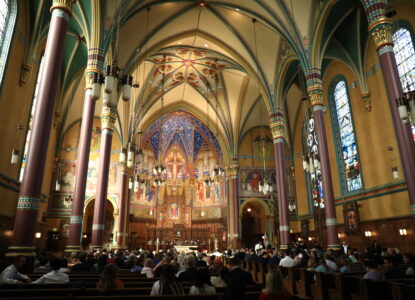
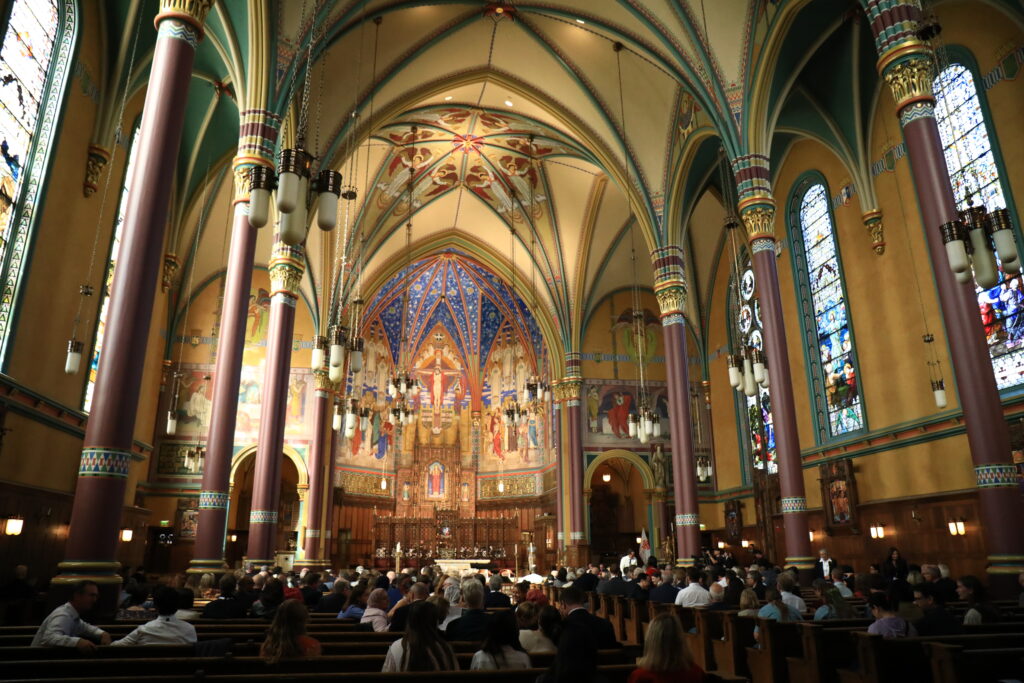
On October 17, 2026, the G20 Interfaith Forum held the Closing Ceremony of its 2026 Forum, “Resilient Hope, Shared Future,” at the Cathedral of the Madeleine in Salt Lake City. The Cathedral Choir and the cathedral’s organ filled the Madeleine with music, including Ralph Vaughan Williams’s setting of Psalm 100 and selections from Randall Thompson’s The Peaceable Kingdom, in a program ranging from Mozart to Aaron Copland.
Speakers included The Very Reverend Christopher P. Gray, Rector of the Cathedral of the Madeleine; H.E. Cheikhna Al Mahfoudh Bin Bayyah, Secretary General of the Abu Dhabi Forum for Peace; President Taylor Randall of the University of Utah; Dr. Sam Rushworth, Member of Parliament for Bishop Auckland, United Kingdom; Professor W. Cole Durham, President of the G20 Interfaith Forum Association; and Dr. Mohamed Elsanousi, Executive Director of the Network for Religious and Traditional Peacemakers. Professor Katherine Marshall, Vice President of the G20 Interfaith Forum Association, moderated a dialogue between elders and young leaders. Bishop Marcelo Sánchez Sorondo, Chancellor Emeritus of the Pontifical Academy of Sciences, offered the opening prayer, and Imam Mohamed Hag Magid, Executive Religious Director of the All Dulles Area Muslim Society (ADAMS) Center, offered the closing prayer.
The Very Reverend Christopher P. Gray
Welcoming participants to the cathedral, dedicated in 1909 at the heart of the city, Gray said its meaning lies not in the grandeur of its architecture but in what happens within its walls. The most important work of faith, he said, happens not at conferences but when someone who is hurting, with nowhere else to turn, walks through the doors of a congregation. Recalling Lord Russell Rook’s invitation earlier in the Forum to say “ICU” (integrity, charity, unity), he urged participants to see the person right next to them, so that no human being is invisible.
“We do not all share the same beliefs—and they matter—but we can all stand for the dignity of others.”
Elders and Young Leaders Dialogue
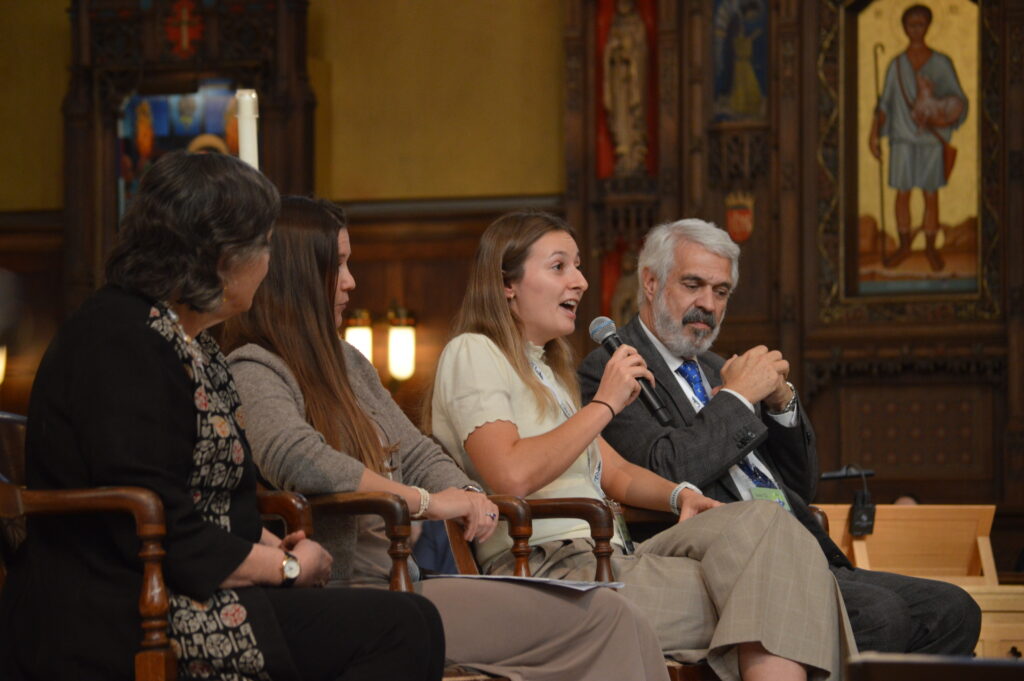
Marshall invited young leaders to reflect on the Forum’s theme as a chance to look both back and forward. One described young people as part of the present as well as the future, and urged the IF20 to reach out to every G20 country as it begins its next chapter in the United Kingdom. Liliya Khasanova, former Executive Director of A Common Word Among the Youth (ACWAY), spoke of the wisdom she inherited from her mother and grandmother and called for mentorship and visibility for young people, who are too often exhausted from working without institutional resources. A member of the UK organizing team pointed to rising conflict, digital security, and AI and the future of work, noting that AI will feature in the 2027 program.
Marshall closed the dialogue by acknowledging the persistence and courage it takes to change the world, but said much is possible, pointing to the polio vaccine as one of the miracles we see all around us. She expressed gratitude for the shared conviction that we are all in this together.
H.E. Cheikhna Al Mahfoudh Bin Bayyah
Bin Bayyah asked participants to lift their eyes, protect those who are different, and understand the consequences of their actions. War begins with words, he said, and peace needs education, especially when religion is misused to justify violence. He left participants with three commitments: take responsibility for our words; turn our values into service by feeding those in need and preparing for disasters; and guide AI with ethics.
President Taylor Randall
Randall said that leading a campus of some 40,000 students has shown him how many young people today suffer from isolation. Interfaith groups matter on campus, he said, because they build empathy and bridges between people, and the deep sense of community they create brings hope for the future. He encouraged participants to find commonalities first and then seek to understand differences, and to carry the Forum’s work forward in an age of technology.
Dr. Sam Rushworth
Rushworth, a member of The Church of Jesus Christ of Latter-day Saints, recalled the British pioneers who crossed the ocean and set to work building a temple at a time when survival itself was difficult. Faith is foundational, he said, offering belonging, purpose, and hope, and it must find a place at the policymaking table. The Jubilee 2000 debt-relief campaign and Make Poverty History set the course of his career, and with confidence in institutions declining, the G20 remains indispensable.
Looking ahead to the United Kingdom’s G20 presidency, Rushworth said the UK’s IF20 steering group is engaging with the Prime Minister’s team, and previewed three themes for 2027: people, with a focus on maternal and child health; planet, including energy and climate; and peace, including freedom of religion or belief. The year will be an international movement of faith communities rather than a single conference, culminating in a landmark gathering in autumn 2027.
“Bring your umbrellas and your convictions.”
Professor W. Cole Durham
Durham, whose pioneer ancestors came to Utah by handcart, said it was meaningful to hold the Forum in his own community. He thanked the many people who made it possible, including the International Center for Law and Religion Studies, 87 young adult volunteers, the Cathedral of the Madeleine, the IF20’s global ambassadors and board, and supporting philanthropies and The Church of Jesus Christ of Latter-day Saints, with special thanks to Marshall. Noting the urgency of the issues ahead, including artificial intelligence, he reminded participants in the words of scripture that there are more with us than with them.
“See what needs to be seen and do what needs to be done.”
Concluding Remarks
Elsanousi paid special tribute to Durham and Marshall for their vision in creating and sustaining the IF20, built on commitments to bringing faith perspectives into global policymaking, leaving no one behind, protecting religious liberty, and turning dialogue into action. What began 12 years ago as a side meeting of the G20 summit, expected to be a one-time gathering, has become a global network, he said, guided by Durham’s maxim that if faith communities are not at the policymaking table, they are on the menu.
Imam Mohamed Hag Magid offered the closing prayer. The IF20 now looks to the G20 Leaders’ Summit in Miami on December 14–15 and to the United Kingdom’s G20 presidency in 2027. The full program is available at the 2026 Forum program page.
———
JoAnne Wadsworth is Vice Director of Communications for the G20 Interfaith Forum (IF20) and Editor of Viewpoints, IF20’s platform for commentary at the intersection of faith and global policy. She has covered the work of the Forum across multiple G20 cycles, producing summaries, articles, and editorial content that bring the voices of interfaith leaders and scholars to a broader audience. Her writing engages with topics spanning environmental governance, religious freedom, anti-racism, poverty and inequality, and the role of faith in multilateral policy processes. Passionate about interfaith dialogue, she believes that good storytelling has the power to change the world.