
By Marianna Richardson, Director of Communications for the G20 Interfaith Forum and head of its AI working group
———
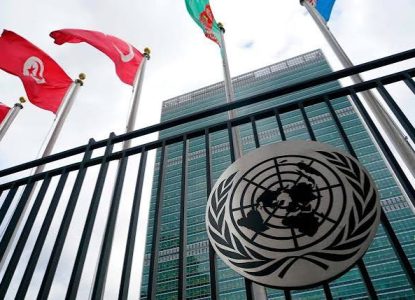
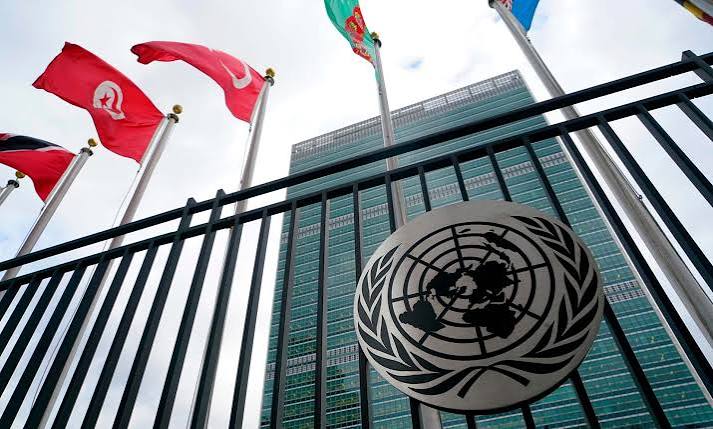
On 23 June 2026, the United Nations convened the Open Source × AI day of UN Open Source Week 2026 at United Nations Headquarters in New York, co-hosted by the UN Office for Digital and Emerging Technologies (ODET) and the Office of Information and Communications Technology (OICT). This summary covers the day’s framing sessions: opening remarks by Amandeep Singh Gill, UN Under-Secretary-General and Special Envoy on Technology, who leads ODET; and a keynote and fireside conversation with Yann LeCun, Turing Award laureate, one of the acknowledged “godfathers of AI,” and Chief Science Advisor to the AI Alliance following his 2026 departure from Meta.
A Full Day Devoted to AI
For the first time, UN Open Source Week set aside an entire day for artificial intelligence — a shift that Under-Secretary-General Amandeep Singh Gill described as moving technology from the margins of the UN’s agenda to its centerpiece. Opening the day, Singh Gill noted that participants had come from every region of the world, and that the gathering’s purpose was less to advance a policy agenda than to empower the technologists and communities actually building, deploying, and using AI. Openness, he argued, is what makes that possible: open-source tools and frameworks give startups and entrepreneurs a common starting point and bring fresh talent into the field.
Yet openness alone, he cautioned, is not enough. For open source to deliver, it must be paired with investment, skills development, and strategies that keep ordinary users in view. Singh Gill pointed to the release of the first International Global Governance Report as a marker of that commitment — an attempt to establish shared rules of engagement and, in his framing, the first platform where every nation has a seat at the table. He closed with two proposals that recurred throughout the day: a global AI fund for countries that need support, and a network of centers for knowledge exchange, both grounded in “horizontal” learning among countries rather than top-down direction.
AI as Foundational Infrastructure
The day’s keynote came from Yann LeCun, who used it to argue that the future of AI must be open, diverse, and globally shared. AI, he contended, has already become a foundational platform rather than a niche tool — increasingly the primary way people interact with the digital world. Before long, he suggested, personalized AI assistants delivered through smartphones and smart glasses will mediate nearly all of the information we consume, hearing what we hear and seeing what we see, and answering our questions before we ever reach a library or a primary source.
That prospect, he argued, is precisely why the source of these systems matters. If everyone’s “information diet” is mediated by a handful of assistants built only by companies in the United States and China, then global opinion, culture, and language will be shaped — and narrowed — by those few actors. True AI sovereignty, LeCun maintained, requires open platforms, because most nations can neither afford nor justify building their own large language models, and today’s proprietary models are, in his words, good but not great. Sovereignty, in the end, comes down to compute and access.
A Federated Alternative: Project Tapestry
LeCun’s proposed answer is Project Tapestry, a global open-source initiative he now advises through the AI Alliance. Its design lets each country digitize and keep its own cultural material private while contributing only parameter vectors to a shared model — training a common system collaboratively without ever surrendering the underlying data. The approach, he argued, preserves cultural identity while enabling collective progress, and it has drawn steady interest from governments and industry alike since its launch earlier in the year.
He placed open source within a longer history of open platforms displacing proprietary ones. In the late 1990s, standing up an internet service meant buying proprietary hardware and operating systems; within a few years, community-built open-source stacks had all but wiped that model out because they were cheaper, easier, and community-led. Open source in AI, he predicted, is similarly inevitable, and governments should accelerate rather than restrict it. Arguments that access must be tightly regulated because bad actors will misuse it are, in his view, overstated; banning open-source AI on security grounds would be as misguided as trying to limit the printing press.
The Race Is Not Over
LeCun pushed back on the sense that the race for AI has already been lost to the United States and China. Those countries may lead in the large language models that excel at declarative knowledge, coding, and mathematics — the domains where systems can already reason and verify their own work. But the next revolution, he argued, belongs to AI that can operate in the physical world, and it has not yet been won: there are still no reliable domestic robots, and current systems remain poor at handling real-world complexity. In a fireside exchange with Singh Gill, he explained why, distinguishing the “world models” needed to plan and act in physical space from the autoregressive, next-word architectures that work so well for language. Most of the near-term value, he suggested, will appear in industry — modeling complex systems such as jet engines, human cells, and medical treatments.
On risk, LeCun urged the audience to separate speculative fears from real ones. Existential-risk scenarios he dismissed as largely invented; the concrete danger he sees is the concentration of technological power, which is itself an argument for open source. Today’s language models, he noted, are not dangerous because they are not yet smart — they can widen access to information, but obtaining a recipe is not the same as building a weapon, and defensive uses of AI tend to keep pace with offensive ones. He also flagged the unresolved economics of the field, citing the gap between the enormous sums being invested in AI and the revenue currently justifying them, and offered a hopeful analogy to the fiber-optic glut that followed the dot-com crash: hardware that looks scarce today may become cheap enough tomorrow to make large-scale training broadly affordable. Asked where AI could most help with development, he pointed to agriculture and to simple, inexpensive models over costly ones — a farmer, he imagined, glancing at a crop through smart glasses and asking what disease it shows — provided the cost of inference continues to fall.
———
Marianna Richardson is Director of Communications for the G20 Interfaith Forum, where she leads the Forum’s AI working group and its ongoing exploration of how artificial intelligence intersects with faith, ethics, and public policy. She is also an adjunct professor of management communication at the BYU Marriott School of Business, where she serves as editor-in-chief of the Marriott Student Review and faculty advisor for the Measuring Success Right podcast, and she sits on the International Advisory Council for the International Center for Law and Religious Studies. She attended UN Open Source Week 2026 on behalf of the G20 Interfaith Forum to follow developments in open-source and sovereign AI that bear on the Forum’s work at the intersection of faith and policy.