
By Marianna Richardson, Director of Communications for the G20 Interfaith Forum and head of its AI working group
– – –
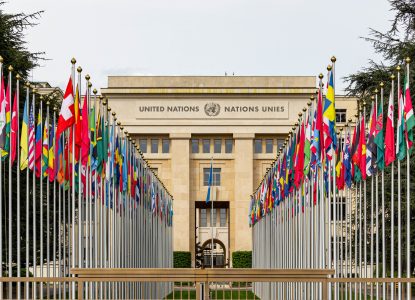
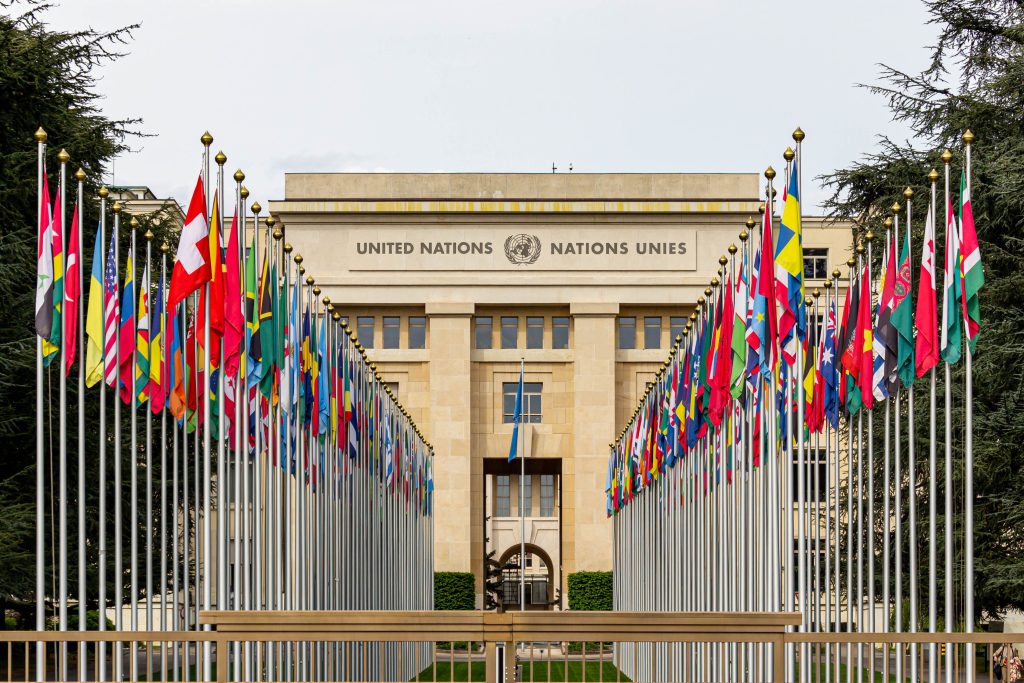
On July 6-7, the United Nations held the First Worldwide Global AI Dialogue in Geneva, Switzerland. This event allowed countries to have a voice in the discussion of the future of governance for AI so that AI is for all and AI is for good. The AI Dialogue was a closed meeting for government leaders, civil society members, and industry leaders who were previously reviewed to become delegates.
July 7, 2026 was the second day of the Global AI Dialogue. The discussion was a continuation of the same concerns and hopeful recommendations.
UN AI Resource Hub Launch
When the group came back together in the plenary room, the UN AI Resource Hub was launched.
Interagency work on AI across the UN system is expanding rapidly, but it remains dispersed across numerous UN bodies rather than consolidated into a single structure. Current mapping shows 581 AI‑related mentions and 508 tools in use, demonstrating strong knowledge and growing capacity building, especially in peace and development work. However, these tools and initiatives are difficult to locate, and duplication persists. To address this, the UN is developing the UN AI Resource Hub as a unified entry point that consolidates practical tools, strengthens capacity building, and connects the UN system into a more coherent ecosystem of support. The hub is designed to make resources easier to find, avoid redundancy, and enable agencies to learn from one another. A call to action invites all UN entities to contribute their AI tools, knowledge, and practices to the Hub so the entire system can benefit from shared expertise and coordinated governance.
EU Center for Human-Centered AI
Germany announced the creation of a European Union Center for Human‑Centered AI, which will serve as a shared platform for all European nations to work together on the future of responsible AI. The center is designed to support a uniform, risk‑based governance framework across the EU, ensuring that AI systems are developed and deployed with safety, accountability, and human dignity at their core. It will also collaborate with independent partners to strengthen technical expertise and reinforce democratic oversight. Germany emphasized that the center will address both sustainable development priorities and regional needs, reflecting Europe’s shared commitment to shaping AI in a way that benefits all communities while safeguarding fundamental rights.
Highlights from Individual Statements
Katy Strickland, representing the United States, emphasized that AI is creating a transformative new industry with significant benefits if adoption is widespread and responsible. She noted that governments are key adopters of AI and play an essential role in establishing public trust. Strickland argued that government action must be paired with pro‑development policies that support workers, build tools and infrastructure, and rely on industry as a full partner. She stressed that companies often understand the scope of AI development better than governments, making it important for countries to use AI actively and involve industry in shaping standards.
Brad Smith, Vice Chair and President of Microsoft, described this moment as critical for global AI governance. He recalled that less than four years have passed since the release of ChatGPT, yet generative AI has already reshaped global dynamics. Smith highlighted a widening digital divide, noting that AI diffusion is 27% in the Global North versus 15% in the Global South, meaning the gap is growing rather than narrowing. He argued that countries—not machines—will decide whether AI expands or limits economic opportunity. Smith warned that AI has raced ahead while governance has fallen behind, increasing the risk of harm. The only way to catch up, he said, is through inclusive, multi-stakeholder cooperation. He called for interoperability, shared values, and coordinated action across sectors, stressing that the UN, ITU, and UNESCO have essential roles. Smith concluded that the world deserves hope and that bridging divides through real programs and international collaboration can ensure AI becomes a force for building a better future.

Final Plenary
The United Nations must play a central role in bringing all 193 member states together, because the momentum for cooperation comes from nations themselves. Speakers noted that more than 150 written submissions, including one from IF20, demonstrate broad engagement and the need for the UN to consolidate efforts across business, civil society, and governments. The UN’s comparative advantage lies in its legitimacy and inclusivity, and its ability to connect global initiatives such as the G20 and G7 with UN‑led processes. The Secretary‑General’s priorities of transparency, child safety, and practical governance will inform upcoming reports and the May UN meeting, where high‑level ideas must become operational.
Participants stressed that countries move at different speeds but share common interests in sustainable development, truth, and cooperation. They outlined three priorities: helping states build effective national laws, expanding digital financing and public awareness, and strengthening skills and capacity—especially for the Global South’s young population. A flexible but shared governance framework is needed to ensure visible capacity gains.
Several leaders, including the current President of Ireland, warned that top AI companies are advancing toward recursive self‑improvement, increasing autonomy and reducing human control. They argued that only the UN has the legitimacy to prevent AI from crossing dangerous thresholds. Many countries lack AI expertise and risk being left behind, creating two frontiers: rapidly advancing AI capabilities and uneven national readiness.
The President of Iceland emphasized that public trust must be rebuilt through practical mechanisms that link global conversations and ensure inclusion. Across interventions, speakers agreed that the UN is the critical venue where dialogue can converge, risks can be anticipated, and global governance can be shaped to protect people while enabling innovation.
Final Thoughts
From the beginning of this dialogue, the thematic groups writing the initial Report for this body emphasized that AI governance must prioritize wisdom over speed, noting that the real contest is not who deploys AI first but who deploys it responsibly and with human accountability. They stressed that most AI will flow from “big AI to small AI,” making local context, cultural benchmarks, and community‑centered design essential as we move forward. Delegates highlighted that access alone does not create wealth, but capacity does. That strategy must be treated as a collective movement built on openness and inclusion. African representatives raised concerns about systemic exclusion, including high visa refusal rates that prevent African experts from participating in global dialogues, proposing ideas such as “AI passports” to ensure equitable access. Speakers urged building AI systems for communities, drawing on principles like Ubuntu, and recognizing the role of creatives, democracy advocates, and civil society. They noted that many African nations sign treaties but fail to operationalize them domestically, and that stakeholders often work in isolation rather than through coordinated national processes. Submissions to UNDialogueAI.org—including “Faith and AI”—reinforced that human capabilities, rights, and lived perspectives must be integral to the global AI agenda. Across all interventions, participants called for international innovation grounded in human needs, rights‑based design, and inclusive participation.
Across the entire dialogue, a clear consensus emerged that AI governance must be global, inclusive, and grounded in human dignity. Countries repeatedly stressed that capacity, not mere access, determines whether AI becomes a tool of empowerment or exclusion. Delegates warned that geopolitical divides, unequal participation, and rapid frontier development risk leaving many nations behind. They called for multilateral cooperation, shared standards, and mechanisms that allow all regions, especially the Global South, to shape AI’s trajectory. The dialogue underscored that AI is a paradigm shift touching culture, democracy, rights, and identity, and that governance must reflect the voices of communities, creatives, youth, and civil society. Ultimately, the collective message was that AI must be built with people, for people, and that global governance must ensure AI becomes a force for inclusion, justice, and shared human flourishing.
– – –
Marianna Richardson is the Director of Communications for the G20 Interfaith Forum. She is also an adjunct professor at the Marriott School of Business at Brigham Young University.