
By Marianna Richardson, Director of Communications for the G20 Interfaith Forum and head of its AI working group
– – –
On July 6-7, the United Nations held the First Worldwide Global AI Dialogue in Geneva, Switzerland. This event allowed countries to have a voice in the discussion of the future of governance for AI so that AI is for all and AI is for good. The AI Dialogue was a closed meeting for government leaders, civil society members, and industry leaders who were previously reviewed to become delegates.
July 7, 2026 was the second day of the Global AI Dialogue. The discussion was a continuation of the same concerns and hopeful recommendations. There were even more opportunities for side events. The following are short summaries of three of the side events that I attended.
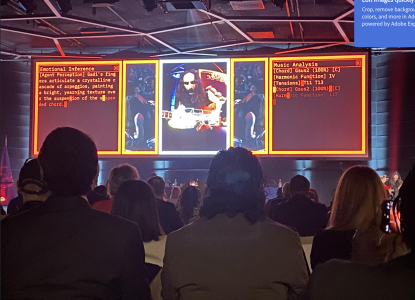
Side Event: Information Integrity in the Age of AI: Building Trust, Countering Disinformation and Protecting People Online
Speakers highlighted growing global concern about information integrity in the age of generative AI. Data from recent consultations showed that when people ask questions online, 45% encounter issues and 30% encounter major issues, across 18 countries and four languages. Delegates warned that AI accelerates misinformation, making fabricated content faster and cheaper to produce, eroding trust and creating systemic risks. Newsrooms are already struggling, prompting European broadcasters and G7 partners to launch the Global Trust Challenge, a multilateral effort involving IEEE, ECD, and UNESCO to strengthen information integrity and develop prototypes for safer AI systems. Importantly, 30% of proposals came from the Global South, signaling a shift away from top‑down approaches dominated by major AI infrastructure providers.
Children’s online safety emerged as a critical theme. UNICEF reported that children adopt AI three times faster than adults, with harms worsening for non‑English speakers. Between 2022 and 2025, children’s exposure to AI‑related risks doubled, and 90% of gender‑based misinformation targeted women and girls. Speakers warned that current systems are optimized for engagement rather than safety, allowing deepfakes, manipulation, and harmful design choices to proliferate. They argued that children cannot opt out of AI, and therefore systems must embed safety by default, undergo independent testing, and meet standards comparable to medicine, food, and aviation.
Participants stressed that no single government can address these challenges alone. Trust must be treated as a public good, supported by global collaboration, open‑source innovation, and shared oversight mechanisms. AI literacy is now essential, as media literacy alone cannot equip people to understand how AI generates information. Public service media, journalists, and technologists must work together to ensure content can travel safely across languages and borders. Ultimately, speakers called for empowering people, strengthening democratic resilience, and ensuring AI becomes a force for inclusion rather than division and distrust.
Side Event: AI Governance for Latin American and Caribbean Nations
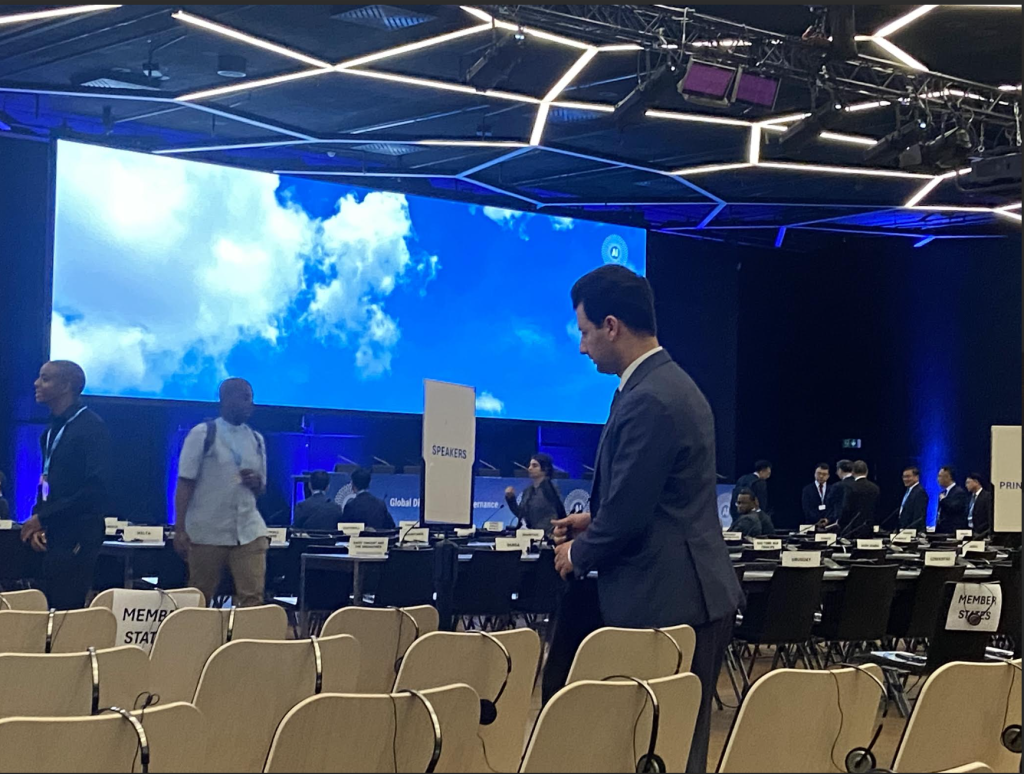
This side event highlighted that the region remains far from effective AI use, despite rapid global transformation. Delegates from the Cayman Islands noted a growing trap: AI companies are arriving, but citizens are not trained to take the jobs, leaving opportunities to outsiders, including workers from the United States. Participants agreed that three elements are urgently needed: (1) knowledge and monitoring, (2) policy dialogue, and (3) assistance and training.
Speakers emphasized the importance of regional AI governance and a collective voice to shape global discussions. Costa Rica was cited as a precedent for launching clear AI policies and road maps through open, inter‑agency processes. The regional body ICLAC stressed that state leadership is essential for legitimacy and that success will depend on what countries accomplish after dialogue, building governance from the ground up.
Side Event: Pathways to Inclusive AI Governance Learning from the Past, Co-building the Future
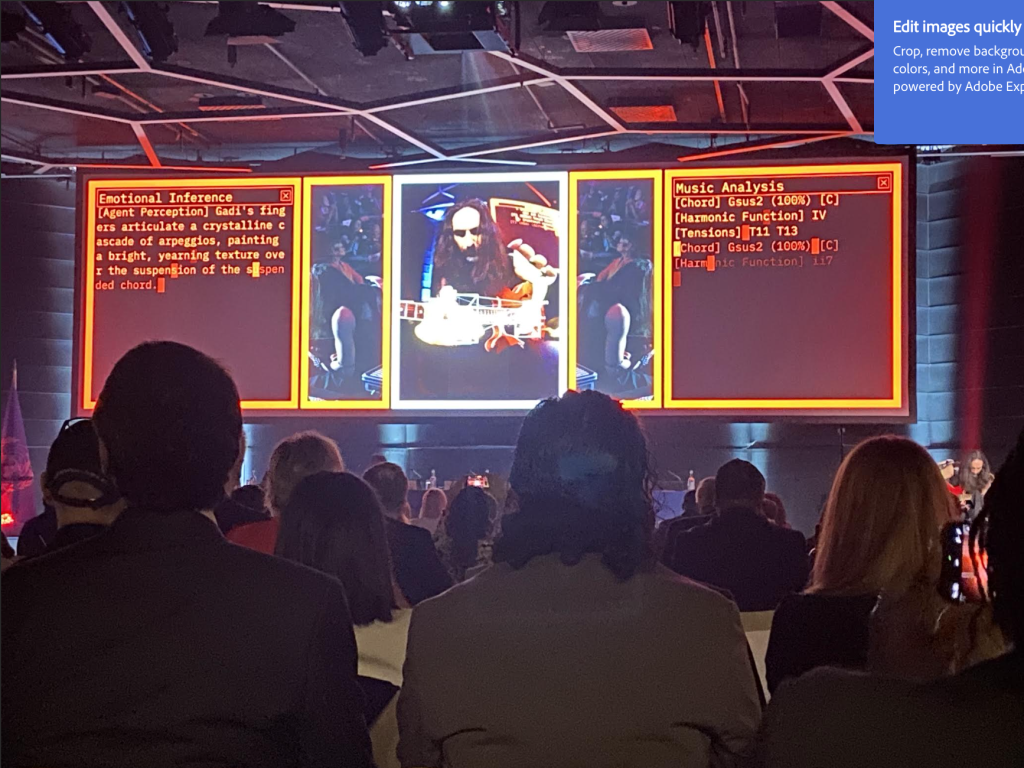
Mary Robinson, former President of Ireland and Chair of The Elders, urged immediate action to steer AI in the right direction. She emphasized that multilateralism must not be abandoned and that a multi‑stakeholder approach—as demonstrated in the Future of Life Institute’s project with MAPAI‑India—is essential for building plural, democratic AI systems. Robinson stressed that trust must be grounded in data and evidence, not rhetoric, and that legitimacy grows when more people participate. She noted that global cooperation has succeeded before, and despite today’s low point in multilateral trust, verification systems and neutral technical processes can help rebuild confidence. She called for a pathway toward an AI governance agency and “quick wins” to restore momentum.
Ambassador Philip Thigo of Kenya highlighted the need for countries in the Global South to step up and ensure everyone is at the table. Ambassador Ioannis Ghikas of Greece stressed the practical work ahead: embedding values into frontier models, strengthening accountability, and pressing the EU to advance a regulatory framework for its own frontier AI systems.
During the panel discussion, Urvashi Aneja, Paulina Ibarra, and Benjamin Prud’homme emphasized the importance of credible evidence, local research ecosystems, and inclusive reporting that reflects communities most affected by AI. They warned against overestimating scientific certainty and called for civil society to be bold, co‑creative, and adequately funded. Countries should have their own AI regulations but there needs to be an international standard allowing for a trust between countries, stopping unfair advantages of a few countries.
In closing, Jorge Cancio of Switzerland underscored the need for realistic expectations ahead of the Geneva AI Summit. He encouraged focusing on tangible deliverables and small, steady steps that expand trust and capability, ensuring AI becomes a force for inclusion rather than division.
– – –
Marianna Richardson is the Director of Communications for the G20 Interfaith Forum. She is also an adjunct professor at the Marriott School of Business at Brigham Young University.