
By JoAnne Wadsworth, Communications Consultant, G20 Interfaith Forum
———
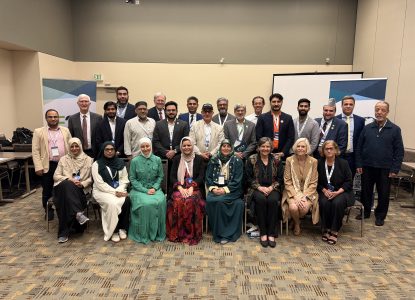
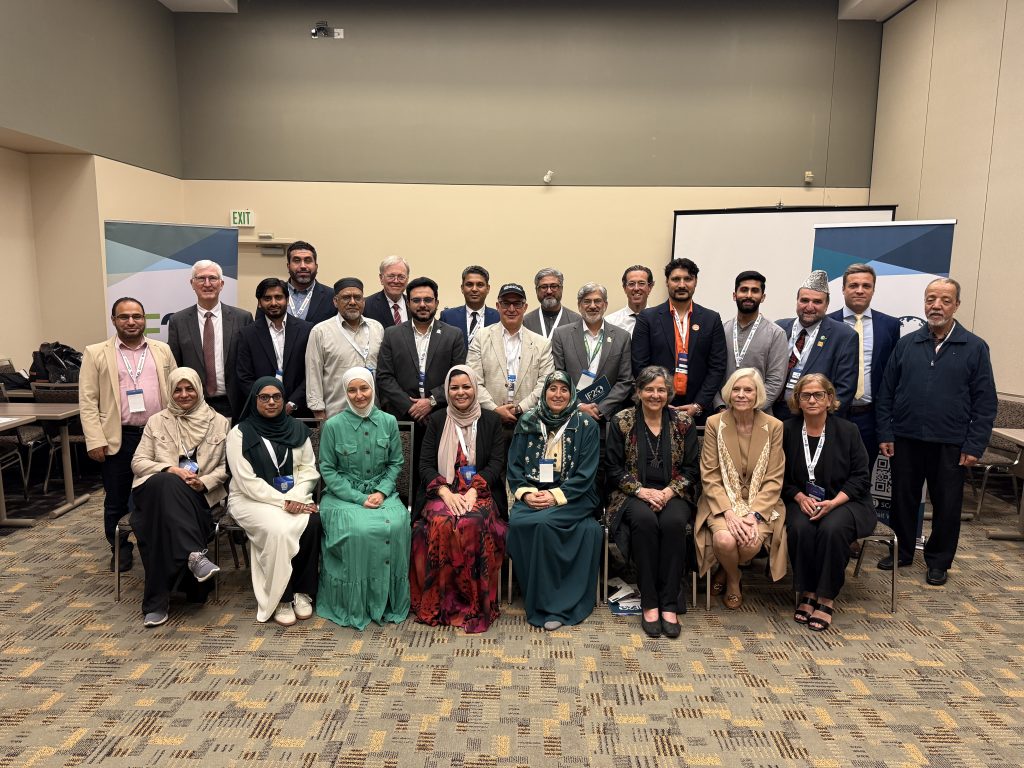
On May 24, 2026, the G20 Interfaith Forum (IF20), in partnership with ICNA Relief, convened a side meeting at the Baltimore Convention Center to gather the perspectives of Islamic humanitarian organizations on the forum’s priorities for the G20 USA year—and, above all, on its draft policy paper on AI and human dignity. Held on the sidelines of a major Muslim convention and in advance of the forum’s main policy gatherings, the convening was designed to ensure that Muslim voices helped shape IF20’s agenda from the outset. IF20 participants included W. Cole Durham, Jr., President of IF20; Katherine Marshall, Vice President of IF20 and Senior Fellow at Georgetown University’s Berkley Center; Marianna Richardson, IF20 Director of Communications and lead author of the draft AI paper; Whitney Clayton, IF20 CEO; Tim Stratford, IF20 legal counsel and an expert on trade and China; and Rodrigo Vitorino Sousa Alves, who chaired IF20’s local organizing committee during the 2024 Brazilian presidency. Muslim humanitarian and civil-society participants included Christina Tobias-Nahi of ICNA Relief; Aseel Elborno, Global Advocacy Manager at Human Appeal USA; Dr. Radwan Masmoudi, Founder and President of the Center for the Study of Islam & Democracy; Dr. Mohamed Elsanousi, Executive Director of the Network for Religious and Traditional Peacemakers; and others.
The G20, the IF20, and the Year’s Priorities
Cole Durham opened the meeting by thanking the participants and framing the opportunity before them. He described the G20 as the premier forum for international economic cooperation—the world’s nineteen largest economies together with the European Union and the African Union, representing roughly eighty percent of global economic output—and explained that, because the G20 has no permanent secretariat, each rotating host country sets its own priorities. The United States holds the presidency in 2026. Within that structure, Durham said, the IF20 functions as a network of networks, a platform created in 2014 to bring religious voices and perspectives into a process that has historically had no place for them.
Katherine Marshall built on that introduction, describing the forum’s central aim as bringing a prophetic moral voice to global agendas where faith communities are too often unheard or cast in a negative light. She outlined the three priorities the United States has set for its G20 year—accelerating economic growth, energy security, and innovation in AI and emerging technologies, with an added emphasis on trade—and noted that the IF20 reframes each through the concerns religious communities care most about. Those enduring concerns, she explained, include hunger, health, human trafficking, education and social cohesion, religious literacy, and disaster preparedness, and the forum tries to draw out the connections among them rather than treating each in isolation.
Rodrigo Vitorino Sousa Alves reflected on the legacy of the 2024 Brazilian presidency, when faith-based voices were brought to the table at the G20 Social Summit and helped shape advocacy on human trafficking and modern slavery. Recommendations, he cautioned, are only as good as the effort to put them into practice; he encouraged participants to get to know the policymakers working behind the scenes, where sound policy is often shaped, and to focus on the many priorities on which people of goodwill already agree.
Inviting Engagement
Marianna Richardson then opened the floor, introducing the draft AI paper and inviting the group to respond candidly—the point at which the Muslim humanitarian representatives took the lead in the conversation. Several urged greater unity across their own sector, naming competition among organizations as a persistent weakness that limits their collective impact. Others traced how Muslim humanitarian advocacy has matured over the decades, moving beyond feeding the needy toward sustained advocacy on refugees, water, education, and food security. Participants also named Islamophobia as a man-made problem to be confronted directly, and several framed their presence simply: they had come to learn, and to find concrete ways to work together.
AI, Human Dignity, and the Most Vulnerable
The discussion then turned to the heart of the draft paper: the promise and peril of artificial intelligence. Participants voiced concern about accountability and the concentration of power and wealth in the hands of a very few, and asked how communities of faith might help build a stable long-term future amid the economic instability that rapid technological change can bring. AI’s capacity to deepen inequality and to transform work, employment, and livelihoods drew particular attention, with some pointing to projections of significant job displacement within only a few years and warning that the most vulnerable stand to lose the most. The pace of change, several argued, requires faith communities to act faster and in far more coordinated ways than they have so far.
A recurring theme was the need to move from abstraction to concrete, winnable action—working at the state and local level with legislators and even with corporations, going to the roots in local communities, and being clear-eyed about what faith actors can realistically accomplish. Marshall pressed the group to be specific about what, exactly, they would want governments to do, observing that moral assertion alone is rarely persuasive, whereas solid evidence paired with a credible prophetic voice can be. Proposals included spreading AI literacy and expanding access for the Global South, engaging vulnerable countries directly, developing AI and religious education, equipping faith leaders and young people with ethical tools, and guarding against an over-reliance on AI that erodes both fundamental learning and genuine human relationships. Participants also flagged AI’s implications for warfare and the environment as concerns the forum should not overlook.
From Abstraction to Action
In closing, Whitney Clayton returned the group to the practical. People tend to worry in the abstract, he observed, but they fix things in the specific—and the answer, he suggested, was in the room itself, in each person present rather than in any AI-generated exchange. He pointed to the value of bringing people together for genuine thought and real solutions to real problems, noting that, for all the division in the world, there is remarkable agreement on the imperative to protect the most vulnerable. Looking ahead, he connected the day’s conversation to the forum’s annual gathering in Salt Lake City this October, where the draft paper’s recommendations will be carried forward. The participants agreed that it made good sense to continue the relationship and to find ongoing ways to work together.
———
JoAnne Wadsworth is a Communications Consultant for the G20 Interfaith Forum Association and Editor of the Viewpoints Blog, IF20’s platform for commentary at the intersection of faith and global policy. She has covered the work of the Forum across multiple G20 cycles, producing summaries, articles, and editorial content that bring the voices of interfaith leaders and scholars to a broader audience. Her writing engages with topics spanning environmental governance, religious freedom, anti-racism, and the role of faith in multilateral policy processes. She is based in the United States.