
By JoAnne Wadsworth, Communications Consultant, G20 Interfaith Forum
———
From 24–29 April 2026, the governments of Colombia and the Netherlands convened the First International Conference on Transitioning Away from Fossil Fuels in Santa Marta, Colombia, in response to COP30’s failure to name fossil fuels in its final agreement. A parallel Meeting of Spiritualities gathered ecumenical, interfaith, and Indigenous spiritual networks — including the World Council of Churches and a member of the G20 Interfaith Forum’s Environment Working Group — to deliver a signed multi-faith call for a binding Treaty on the Non-Proliferation of Fossil Fuels.
When COP30 closed in Belém last November without naming fossil fuels in its final text, the omission drew immediate criticism. The primary driver of the climate crisis had gone unmentioned in the agreement of the very forum convened to address that crisis. A group of around 80 nations had pushed for a fossil-fuel roadmap to be included in the COP30 outcome text; when that effort failed, Colombia and the Netherlands jointly announced they would co-host a separate summit in Santa Marta the following April.
That summit opened on 24 April. It gathered 57 countries — roughly one-third of the world’s economy — for what its co-hosts described as a conference of the willing. Nations that have publicly opposed a fossil-fuel roadmap, including China, Russia, the United States, and India, were not invited; the aim, organizers said, was constructive dialogue rather than diplomatic stalemate. Ministers and envoys sat in inner circles during closed-door breakout sessions, with civil society members, scientists, and Indigenous representatives in the outer ring. The Vatican was among the 57 nations represented from the opening plenary.
Faith communities were present from the first day, both inside the official conference and in a parallel gathering convened expressly to bring spiritual and interfaith voices into the policy conversation.
Spiritualities at the Negotiating Table
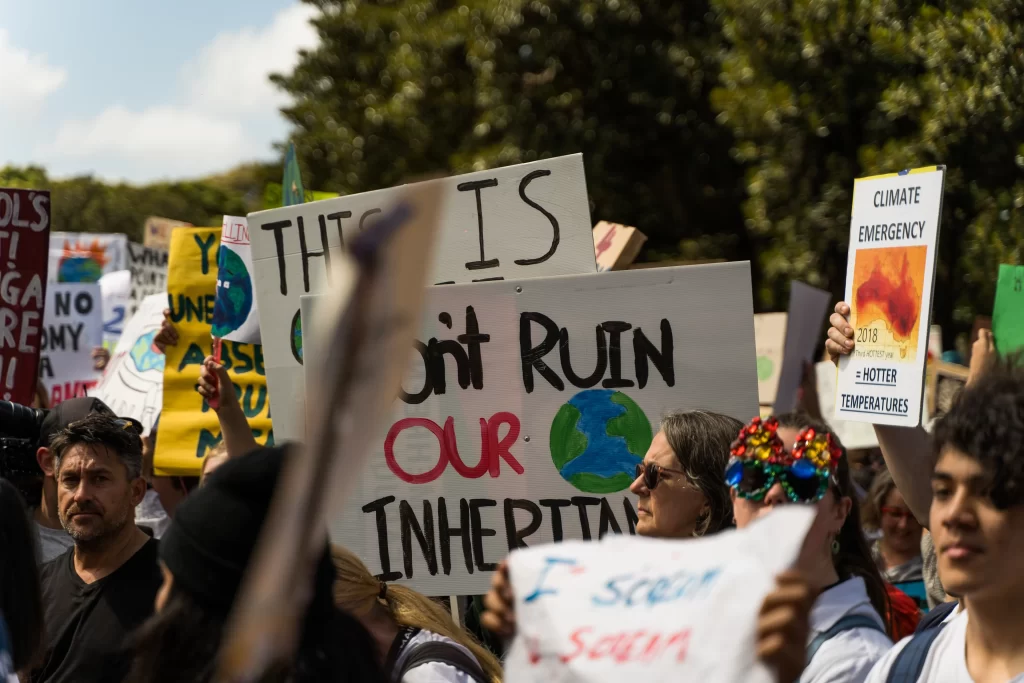
The Meeting of Spiritualities for Transitioning Away from Fossil Fuels, held at the Colegio Diocesano San José, brought together ecumenical, interfaith, and Indigenous spiritual networks for a single, focused day of work. By afternoon’s end, more than 20 organizations — including the World Council of Churches (WCC) — had signed the Call from the Ecumenical, Interfaith and Eco-Spiritual Coalition of the Global South and formally handed it to the Colombian and Dutch governments. The document frames the transition away from fossil fuels as a matter of survival, justice, and fidelity to the very ground of being.
Among those at the center of the gathering was Athena Peralta, director of the WCC Commission on Climate Justice and Sustainable Development — and a member of the G20 Interfaith Forum’s Environment Working Group, chaired by Arthur Lyon Dahl. Speaking at the meeting, Peralta argued that the era we are living in has been misnamed:
“We are not living in the Anthropocene. We are living in the Capitolocene — an era shaped by an extractivist capitalism that treats the Earth as a storehouse of assets and a field for endless profit.”
The reframing was deliberate. The term “Anthropocene,” Peralta suggested, distributes responsibility evenly across humanity — as if every person and culture had played an equal hand in destabilizing the climate. “Capitolocene,” by contrast, names a specific economic logic as the driver.
Drawing on the WCC’s Ecumenical Decade of Climate Justice Action (2025–2034), Peralta invited those gathered into what she described as a prophetic uprising — a turning away from the logic of accumulation toward sufficiency, what she named simply as “enough.” Churches and people of good will, she said, are called to embody a new Exodus: a departure from an extractive economy toward the freedom of a restored creation.
She was not the only faith voice in the room. Rev. Vilma Yanez of the Presbyterian Church of Colombia, a WCC central committee member, described the conference as an invitation to build “an ethical, pastoral, contextual, committed, and hopeful response” to the climate crisis. Bishop Luis Andrés Caicedo Guayara of the Methodist Church of Colombia called it a forum for “in-depth dialogue, mutual listening, and collective action,” and expressed hope that its outcomes would chart paths of cooperation and advocacy. Rev. Milton Mejía served on the local coordinating committee for the meeting, while students from the Reformed University joined the coalition’s call — a generational presence reported by WCC organizers as a significant feature of the gathering.
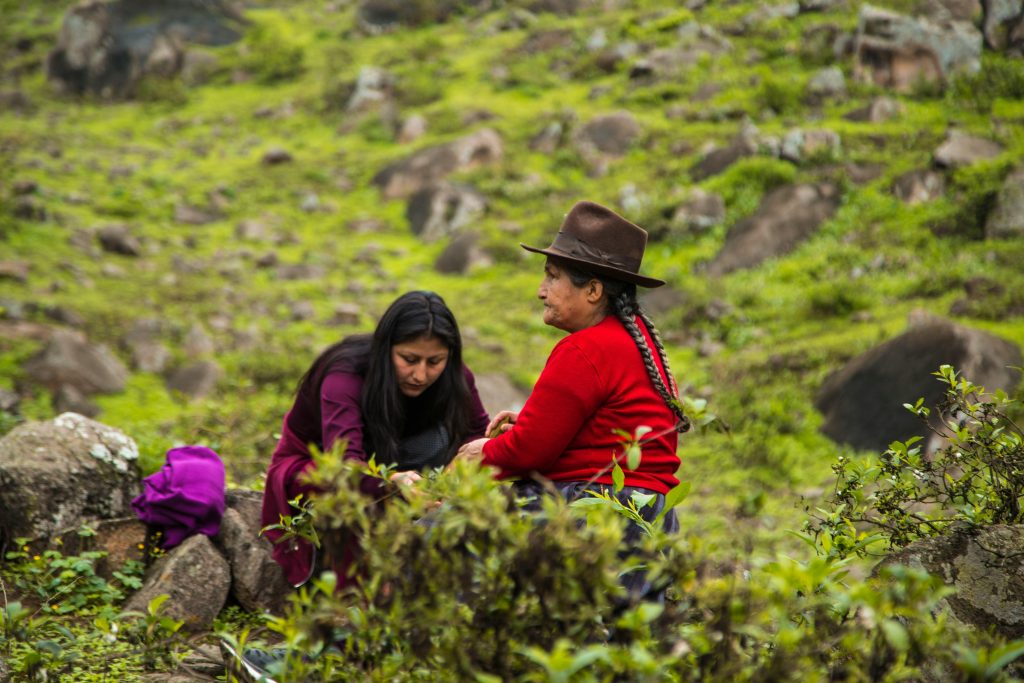
Indigenous voices were also central. Jocabed Reina Solano Miselis, executive director of Memoria Indígena Panamá and a Guna theologian, framed the meeting’s stakes in terms that pressed past energy policy:
“A transition without transformation is a transition without a soul. Without Indigenous rights, it does not respect life.”
That theme — transformation rather than substitution — surfaced repeatedly in the wider conference. Dr. Luz Dary Carmona, Colombia’s vice minister of Environmental Territorial Planning, framed the transition as a remaking of the productive model itself, quoting President Gustavo Petro: “The life of the U’wa people is worth more than oil.” Kumi Naidoo, chair of the Fossil Fuel Non-Proliferation Treaty Initiative and former general secretary of Amnesty International, used what has become the coalition’s most-repeated one-line argument: it is like leaving a tap running, he said; you can keep mopping the floor, or you can turn off the tap.
What Was Decided, and What Comes Next
The Santa Marta conference produced a set of concrete outcomes at its final plenary on 29 April. Tuvalu and Ireland will co-host a second transitioning-away conference in the Pacific in 2027. Three workstreams will carry forward in the meantime: developing national and regional roadmaps away from fossil fuels, tied to countries’ nationally determined contributions; reforming the financial systems that currently entrench fossil-fuel dependence, including a focus on subsidies and debt traps; and advancing a fossil-fuel-free trade agenda, with support from the OECD. A coordination group of countries leading existing transition alliances was established to maintain momentum between summits.
Two scientific initiatives were also launched. A new Science Panel for Global Energy Transition, anchored at the University of São Paulo and co-chaired by economists and energy scholars from Cameroon, Germany, and Brazil, will produce annual analyses with the capacity to scale down to national-level guidance — a meaningful contrast to the IPCC’s seven-year cycle. A synthesis report of twelve action insights, including the call to halt all new fossil-fuel expansion and to recognize fossil fuels as health-harming products, was refined by some 400 scientists at the science pre-conference on 24–25 April. A People’s Assembly organized by the Colombian government brought Indigenous, Afro-descendant, campesino, labor, and women’s voices into closed-door conversations with ministers, and a separate People’s Summit of roughly 900 organizations issued its own declaration on the same days.
One structural feature of the Santa Marta gathering stands out for IF20 audiences. Faith communities were not present at Santa Marta as ceremonial decoration; they helped organize the parallel meeting and contributed to its policy outputs. The WCC was a co-convenor, not a guest. Indigenous theologians were given speaking time, not only listening time. And IF20’s Environment Working Group, through Athena Peralta’s participation, was woven into a network of moral, scientific, and governmental actors converging on a shared diagnosis. IF20’s broader body of work — across its working groups and committees — has long pointed to this kind of integration: policy is more durable, the argument runs, when it is informed by the moral languages and community networks that religious traditions sustain. Roughly 84 percent of the world’s people identify as religious.
As the coalition turns its attention toward COP31 in Antalya, Türkiye, and onward to Tuvalu in 2027, Santa Marta will be one to watch — both for what its workstreams deliver and for the role that faith communities continue to play in shaping them. The tap, as Naidoo put it, is still running. Whether and how quickly the handle can be turned is the question the next several years will have to answer.
———
JoAnne Wadsworth is a Communications Consultant for the G20 Interfaith Forum Association and Editor of the Viewpoints Blog, IF20’s platform for commentary at the intersection of faith and global policy. She has covered the work of the Forum across multiple G20 cycles, producing summaries, articles, and editorial content that bring the voices of interfaith leaders and scholars to a broader audience. Her writing engages with topics spanning environmental governance, religious freedom, anti-racism, and the role of faith in multilateral policy processes. She is based in the United States.