
By JoAnne Wadsworth, Communications Consultant, G20 Interfaith Forum
———
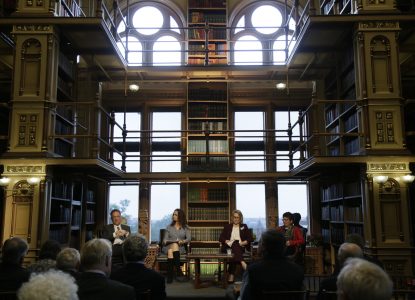
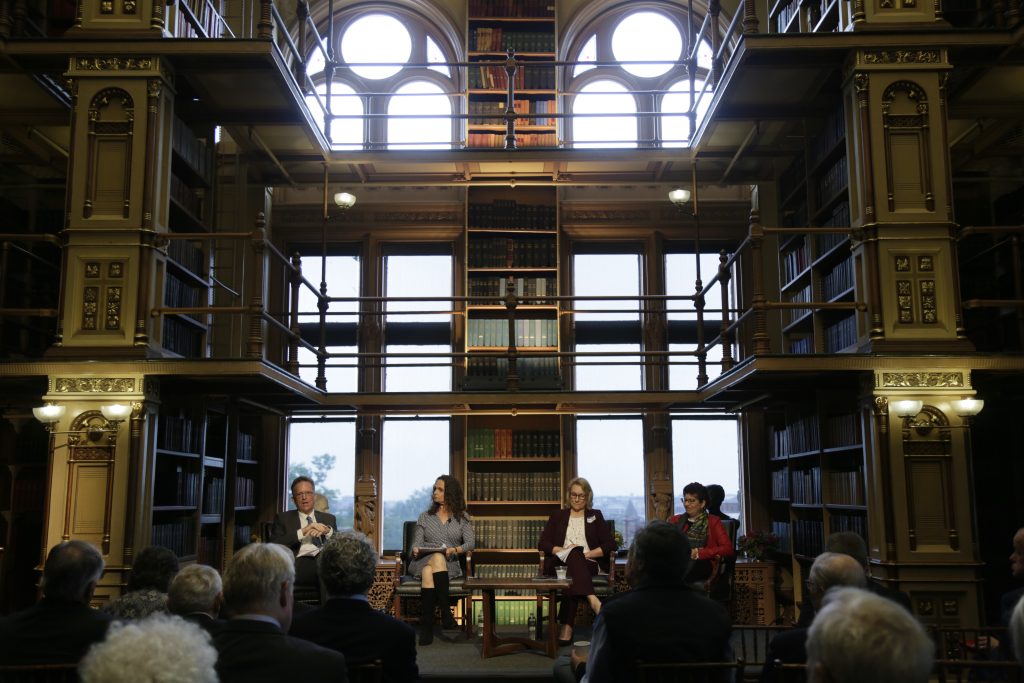
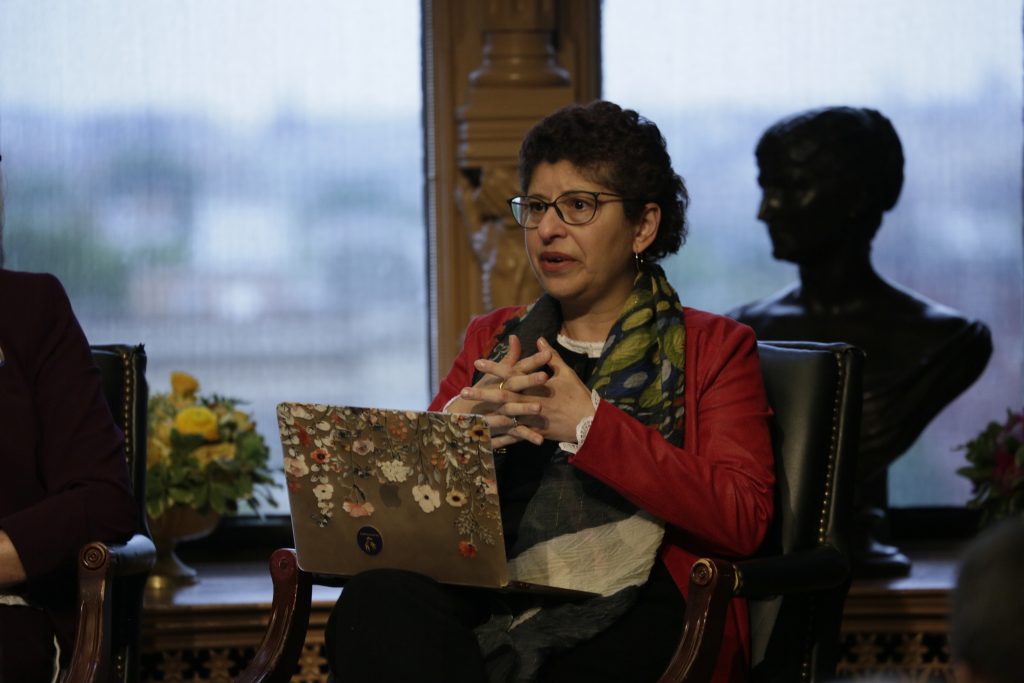
On May 26, 2026, the G20 Interfaith Forum (IF20), in partnership with Georgetown University’s Berkley Center for Religion, Peace, and World Affairs and Brigham Young University’s International Center for Law and Religion Studies (ICLRS), continued its policy meetings in the historic Riggs Library at Georgetown University. This summary—the second in a four-part series—covers the gathering’s second focus area: energy security and a sustainable future. As before, the meetings were held under the Chatham House Rule to encourage candor, so the discussion is presented thematically, and no remarks or quotations are attributed to individual participants.
Setting the Stage: The Hardest Bridge to Build
Participants agreed at the outset that energy may be the most difficult of the year’s focus areas on which to find common ground. The session named the gap squarely: a prevailing “energy abundance” agenda that favors expanded markets for oil, natural gas, and coal—and is skeptical of human-driven climate change—sits uneasily beside the Abrahamic and broader faith traditions that hope to move the world quickly toward a sustainable future built on renewables. The United States’ withdrawal from the Paris Agreement only sharpened the divide.
The conveners pressed a genuinely hard question. Where the two camps might overlap is energy access for the global south, where reliable, affordable energy is essential to growth and to lifting people out of poverty. Given that pledged climate finance has not materialized, is there a case for a mixed regime of renewable and non-renewable energy during a transition period—and can religious communities credibly engage on that ground? Not everyone was comfortable with the premise. Several argued that asking faith leaders to bridge toward a position that denies the climate crisis is asking them to lend moral authority to something false.
“When we accept such a frame, we are abandoning our values and losing our moral authority.”
Values for a Warming World
Much of the discussion returned to the distinctive gifts that religious traditions bring to the climate question. The first is the value of human life and dignity: everyone deserves energy that enlivens and sustains their communities rather than poisoning their air, water, and land—and the climate crisis falls hardest on the most marginalized, who also tend to have the least access to renewable power. A warming planet, participants warned, acts as a force multiplier for existing inequality.
The second gift is the long view. Where markets and politics reward immediate results, profit, and efficiency, faith traditions are practiced at thinking across generations and holding the collective future in trust. The third is imagination—the conviction that the world as it is need not be the world as it must be. Energy security, on this telling, is not merely keeping the lights on; it means envisioning and building a system humanity has never had before, one in which everyone can be sustained and thrive.
“Religious traditions remind us that a different world is possible. We need radical imagination.”
Signs of Hope: What Is Already Working
Against the temptation toward doom, participants insisted there is real momentum to build on—even as they named what is at stake in blunt moral terms.
“We are simply stealing the future, selling it in the present, and calling it Gross Domestic Product.”
One participant pointed to Jesuit universities (the world’s largest network of faith-based higher education), where institutions oriented to a shared mission of care for our common home use education as an engine of social change—some having already reached carbon neutrality and now working to decarbonize further. The lesson offered was simple: it can be done, and it can be done faster. Even with the federal government outside the Paris framework, grassroots and subnational action was held up as a powerful counterweight. A coalition such as America Is All In now unites hundreds of cities, thousands of businesses, multiple states, tribal nations, and faith communities—together representing roughly two-thirds of the U.S. population and three-quarters of its economy—behind the pledge to cut emissions roughly in half by 2030 and reach carbon neutrality by 2050. For many in the room, that was grounds for genuine hope.
A Crisis of Collaboration
A more troubling theme was the state of the faith sector itself. Far from a unified moral force, participants described a landscape of silos—traditions working in parallel, interfaith coalitions fracturing along the same lines as the secular world, and bridges being dismantled rather than built. The deepest worry was that if believers cannot collaborate across their differences, they cannot credibly ask anyone else to.
Compounding the problem, several noted, is that some religious actors are themselves closely aligned with extractive industries, and that instrumentalization runs in both directions: just as governments may seek to use faith communities, faith actors can be tempted to use the state for their own ends. In an era of fraying multilateralism, the group framed collaboration not as a nicety but as a survival skill.
“There is no faith sector as a whole. If we are ever going to save our planet, we will have to learn to collaborate precisely because we are so different.”
From Angst to Action
When the conversation turned to what actually moves people, a clear strategic instinct emerged: spend less energy trying to convert the small minority of outright deniers and more on activating the large majority already concerned. The real task, several argued, is moving people from angst to action.
That led to a frank reckoning with two obstacles. The first is the anxiety of the young, who carry the heaviest fear about the climate future; participants suggested that faith, spirituality, and visible action by older generations can offer them hope—and cautioned that it is profoundly unfair to hand the crisis to the next generation to solve while those with the money, connections, and power look on. The second obstacle is simpler and harder: will. The transition will require giving some things up, at least for a time, and the reluctance to sacrifice keeps the can rolling down the road.
“We are a collective pregnant woman who wants to go home instead of going into labor, despite wanting the healthy child on the other side.”
Who Must Change — and Who Gets Left Behind
As the discussion widened, participants warned against fixating on a single government—the “G1”—at the expense of the broader G20 and the world beyond it. The framing matters: it is the wealthiest, highest-consuming economies, not the developing world, that drive the bulk of emissions, and so it is the G20 that must change. The global south, meanwhile, is not monolithic; some nations have little but coal, while others are rich in renewable potential. The call was to help push the margin toward clean energy rather than dictate terms from afar.
Two groups, participants stressed, must not be forgotten. Religious and other minorities are too often absent from legal frameworks built around majority-religion assumptions, and indigenous communities have seen their lands and spiritual practices harmed by projects such as large hydroelectric dams—a reminder that even “green” transitions can do harm if pursued without consent.
The session closed on cost, which participants called a false dichotomy in need of more honest specificity. The price of renewables has plummeted, and consumer demand—visible in surging electric-vehicle sales and in incentives that help families put solar on their roofs—reflects affordability as much as conviction; the soaring energy appetite of AI data centers, several noted, may even open new common ground for clean-power investment. The deeper point was that the knowledge, the technology, and the wisdom to act already exist.
“We have the resources and the knowledge. We are not doing it.”
What remains, the room agreed, is the will—and the humility to learn from what is already working. That cross-pollination continues in the remaining installments of this series.
———
JoAnne Wadsworth is a Communications Consultant for the G20 Interfaith Forum Association and Editor of the Viewpoints Blog, IF20’s platform for commentary at the intersection of faith and global policy. She has covered the work of the Forum across multiple G20 cycles, producing summaries, articles, and editorial content that bring the voices of interfaith leaders and scholars to a broader audience. Her writing engages with topics spanning environmental governance, religious freedom, anti-racism, and the role of faith in multilateral policy processes. She is based in the United States.