

By JoAnne Wadsworth, Communications Consultant, G20 Interfaith Forum
———
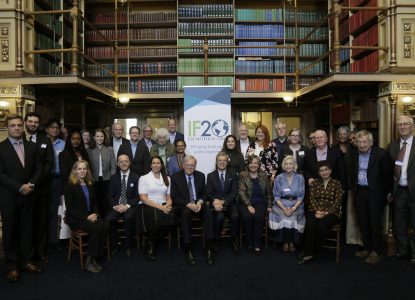
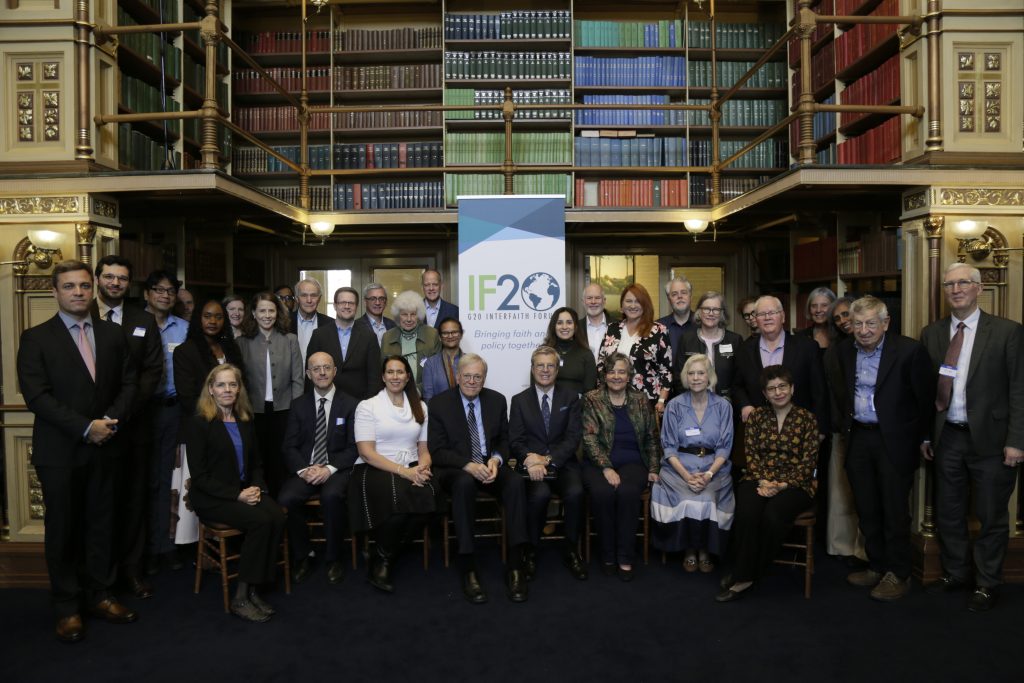
On May 27, 2026, the G20 Interfaith Forum (IF20), in partnership with Georgetown University’s Berkley Center for Religion, Peace, and World Affairs and Brigham Young University’s International Center for Law and Religion Studies (ICLRS), convened the second and final day of its policy meetings in the historic Riggs Library at Georgetown University. Where the first day worked through three G20-aligned focus areas, the second took a workshop form, centered on the Sustainable Development Goals and the practical question of how the forum can turn its convening power into policy impact. This summary—the fourth and last in the series—covers that discussion. As before, the meetings were held under the Chatham House Rule, so the conversation is presented thematically, and no remarks or quotations are attributed to individual participants.
Setting the Stage: From Panels to Practice
The day opened by acknowledging both an abundance and a constraint. Faith communities touch nearly every one of the SDGs’ 169 targets, which is precisely why focus is so hard—and so necessary. Rather than attempt the whole agenda, the group concentrated on a handful of areas where religious actors carry real weight: hunger and poverty, health and education, human trafficking, disaster preparedness, and the peacebuilding work that, while outside the formal G20 mandate, sits at the heart of what faith communities do.
The framing question for the day was blunt: the IF20 has convening power and a recognized name, but its path from rich discussion to actual influence remains underdeveloped. With the forum’s October conference in Salt Lake City set to fall just before the U.S. midterm elections, participants knew that keeping politics at arm’s length would be difficult—and that sharpening the work mattered more than ever.
Engaging Policymakers: An Offer, Not an Ask
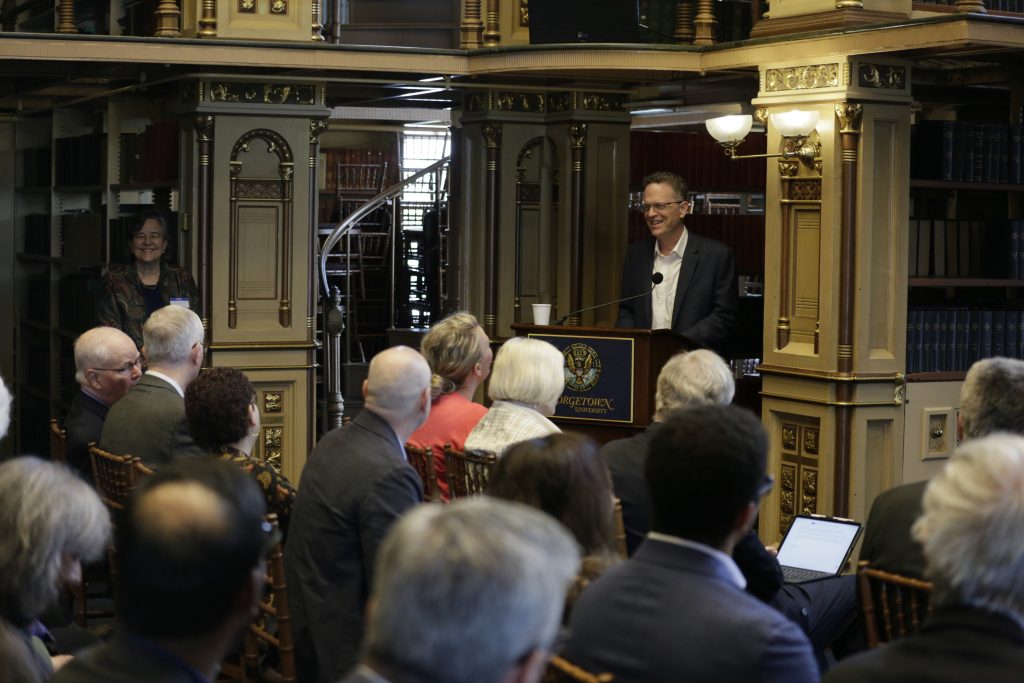
Several provocations pressed the group to see itself as policymakers do. Government ministers operate under crushing time constraints—one recalled that faith-based organizations would not have survived the triage of a thousand annual meeting requests without prior personal familiarity—and they are not looking to be told what they ought to do. They want partners who can help them deliver on goals they already hold.
The encouraging news is that faith communities hold the very assets governments need, if underused: the Catholic Church alone owns land roughly the size of France, religious bodies are among the largest non-governmental health providers in many countries, and pooled investment can be multiplied several times over through mechanisms such as the World Bank’s Pandemic Fund—where, tellingly, only a tiny share of projects currently involve faith actors. Echoing guidance carried over from the previous day’s keynote, participants urged the forum to tune its frequency to the agendas that already exist, to lead with a single powerful ask rather than a laundry list, and above all to travel toward policymakers rather than wait to be sought out.
“You need to come into the game and be realistic about what you can offer and what you demand.”
Holding the Mirror: Accountability Within
A sharp internal challenge ran through the morning. When multilateral institutions do engage religion, the engagement skews heavily toward a familiar few traditions, with others—Islam in particular—too often treated as a problem to be managed rather than a partner to be enlisted. Participants also drew careful distinctions between faith, religious institutions, religious leaders, and the many capable people who staff faith-based organizations without being believers themselves.
The hardest point was self-directed. Religious communities are good at serving their own constituencies and good at meeting one another, but poor at genuine collaboration, rarely pooling moral or financial resources across traditions. If faith communities fault governments for failing to collaborate, several argued, they must hold themselves to the same standard—because the credibility of their seat at any table depends on it.
“If we are mad at governments for not collaborating, we should hold ourselves accountable for not collaborating faith to faith.”
Hunger, Debt, and the Crises That Compound
On hunger, the picture was sobering: the third major food crisis in six years and the fifth this century, arriving atop systems that were already fraying. A crisis precipitated by the war in Iran has drawn a strikingly muted global response compared with the rallying that followed COVID, even as cuts to development assistance and the dismantling of USAID have stripped away capacity. Many low-income countries, facing unsustainable debt, simply lack the fiscal room to respond.
Debt, in fact, surfaced as the crisis beneath the crises—with some governments now spending close to half their revenue on debt servicing, squeezing health, education, and food alike. Yet there was also proof that political will works: Brazil eliminated hunger under Lula’s administration, saw it return under another, and has since fallen off the hunger map again with Lula’s return. Participants pointed to concrete entry points, especially engaging the World Bank at the country-office level, where its priorities of jobs, health, water, agriculture, and energy align closely with faith-community concerns.
“It is the people in charge of our food systems who are going hungry.”
Modern Slavery as a Focused Cause
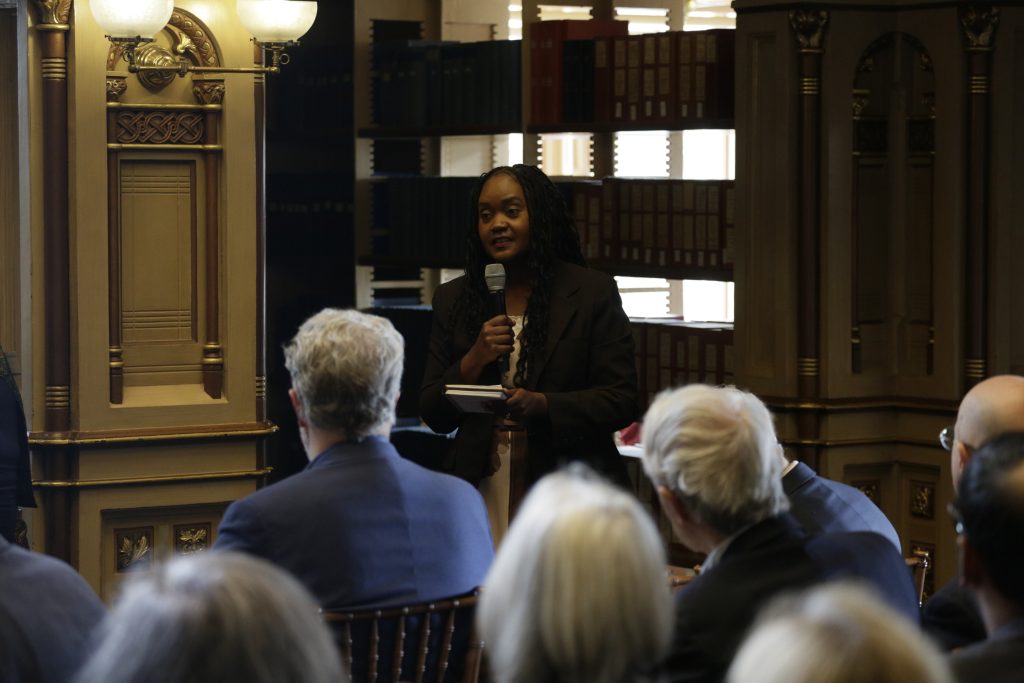
Human trafficking drew sustained attention as a candidate for exactly the kind of focused campaign the forum has been seeking. Reframed not as a development problem but as the second most profitable form of organized crime, it connects migration, labor exploitation, climate displacement, and violence against women and girls—and it lends itself to the same tools governments already use to track illicit goods and money. Much of the harm, participants stressed, is economic: of the roughly $870 billion in global remittances, billions are lost to fraud and excessive fees, and an intervention as simple as giving migrant workers safe access to bank accounts could return real resources to their home communities.
The cause also fits the moment. It aligns with the United Kingdom’s historic anti-slavery leadership ahead of its 2027 presidency, resonates across other G20 engagement groups, and finds fresh grounding in Pope Leo XIV’s new encyclical, which names modern slavery and economic exploitation directly. Faith communities are already doing the on-the-ground work of receiving and resettling returnees—an existing asset the forum can document and amplify. The Jubilee 2000 debt campaign was repeatedly invoked as the model: a single, concrete, morally compelling cause that mobilized congregations and moved policy.
“If people of faith ignore it, everyone else will ignore it too.”
Strategy and the Road Ahead
The strongest consensus of the day was for discipline: choose one to three actionable issues rather than a sprawling agenda, with sovereign debt and extreme hunger as the leading candidates and trafficking a strong possible third. Several urged the forum to anchor its value to the G20’s permanent mission—economic and financial cooperation—rather than chasing each presidency’s shifting themes, which only resets the work to the “first mile” every year. Issue selection, others added, should follow comparative advantage: not merely what matters, but where faith and interfaith organizations bring distinctive assets—community trust, service-delivery networks, and the capacity to hold attention long after political cycles have moved on.
That last point named the deepest contribution faith communities might make. Politics is bound by budgets and electoral calendars; the moral gift of religious traditions may lie in how they think about time, sustaining focus on debt or slavery across decades. Practical next steps converged on refining the policy papers for October’s Salt Lake City conference, naming a single-campaign focus, deepening relationships with the incoming UK government while engaging all G20 members rather than only the host, and diversifying the forum’s funding across many faith traditions so it can be a genuinely multifaith venture.
“We are less about dialogue and more about diapraxis—finding ways to do things together.”
That ambition—to translate broad moral conviction into specific, durable, and actionable proposals—was the thread binding all four sessions of these meetings. It is the work the forum now carries from Riggs Library toward Salt Lake City and, beyond it, the United Kingdom’s 2027 G20 presidency.
———
JoAnne Wadsworth is a Communications Consultant for the G20 Interfaith Forum Association and Editor of the Viewpoints Blog, IF20’s platform for commentary at the intersection of faith and global policy. She has covered the work of the Forum across multiple G20 cycles, producing summaries, articles, and editorial content that bring the voices of interfaith leaders and scholars to a broader audience. Her writing engages with topics spanning environmental governance, religious freedom, anti-racism, and the role of faith in multilateral policy processes. She is based in the United States.